Visit our homepage to subscribe, to find us on social media, and to contact us by email:
• https://havetogawilltravel.com (https://havetogawilltravel.com/)
If you liked this episode, buy us a coffee:
• Our Ko-Fi page (https://ko-fi.com/havetogawilltravel)
Links:
• NYPL’s list of “Heroines in Fairytales, Folklore, Fables and Legends for Young Readers (https://www.nypl.org/blog/2021/03/18/heroines-fairytales-folklore-fables-legends) ” (https://www.nypl.org/blog/2021/03/18/heroines-fairytales-folklore-fables-legends)
Cover Image:
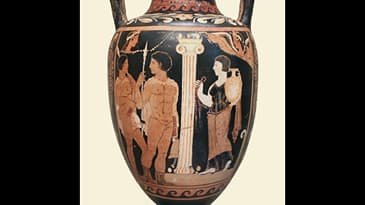
• Pylades, Orestes, and Elektra perform rites at the tomb of Agamemnon. Painted in the late fourth century BCE on an amphora made in one of the Greek cities of southern Italy (which is now held at the MFA in Boston). Photo by Emily.
----------
00:11 - Introduction
01:15 - What is a hero?
• 01:33 - Some modern definitions of hero
• 02:52 - The roots of the word “hero” in ancient Greek (and maybe earlier)
• 04:12 - The various meanings of “hero” in ancient Greece: leaders, godlike heroes, and mortals given divine honors
• 13:09 – The flexibility of the hero concept in ancient Greece, and some examples: Achilles, Sarpedon, Theagenes of Thasos, and Kleomedes of Astypalaia
• 20:15 – Death and the hero in ancient Greece, and some strange cases: Asklepios and Herakles
26:51 - The stories we tell about heroes
• 27:39 – Two models of the “hero’s journey”: Joseph Campbell, “The Hero with a Thousand Faces”, and David Adams Leeming, “Mythology”
• 30:57 - A digression on problematic treatments of gender in hero studies
• 33:40 - Odysseus as the Cambell-style “everyman” hero
• 36:00 - Herakles as the Leeming-style “Chosen One”
• 42:26 – Coda: Alexander the Great and Herakles
44:17 - Wrap-up and teaser for our next episode on Stranger Things’ “Eleven”