
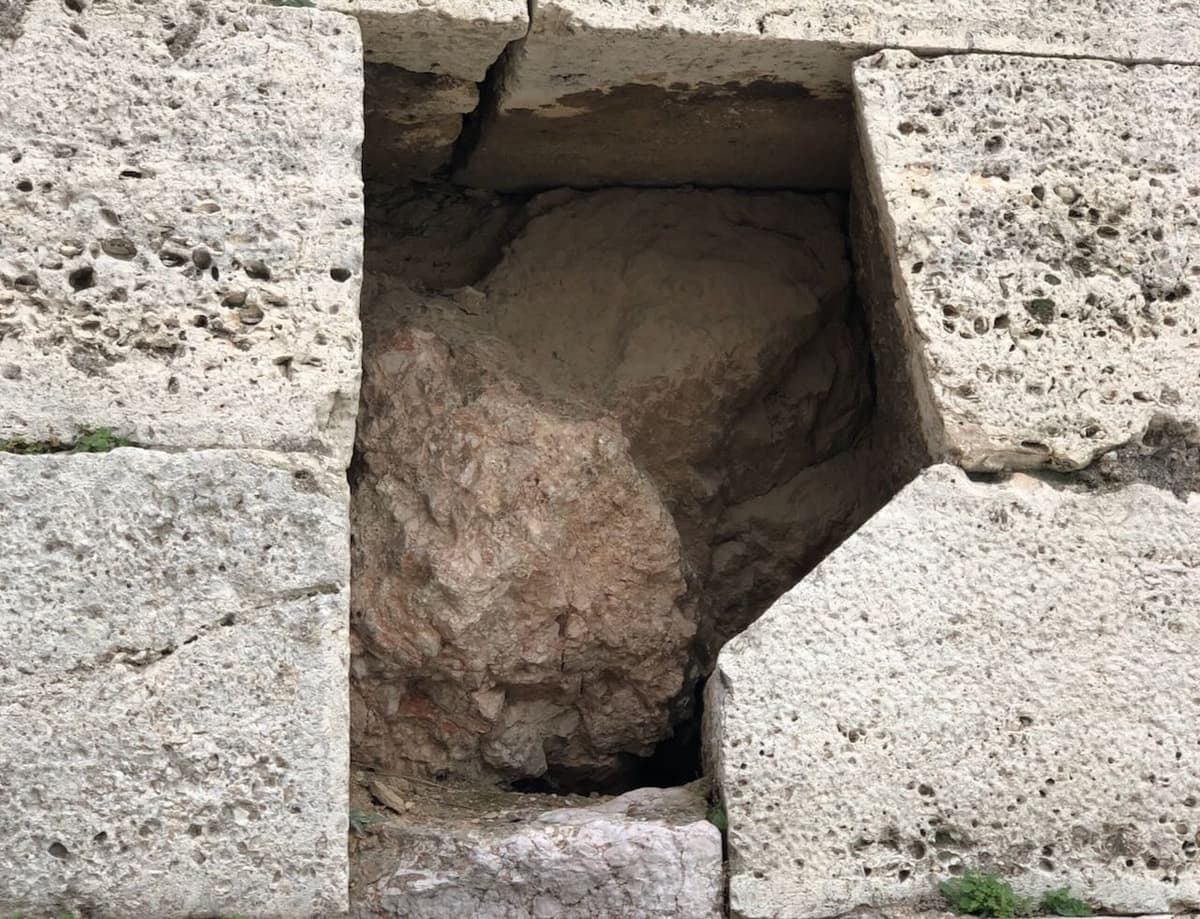
In our latest episode, The Athenian Acropolis, Throughout the Ages, we mention that there are a few visible remnants of the Late Bronze Age fortifications on the Acropolis. Because these are tucked away and not signed, we wanted to post a couple of pictures so that curious visitors can find them more easily.
The pictures below focus on the Bronze Age remnants encased within the Athena Nikē bastion and the staircase associated with the southern fortifications of the Bronze Age citadel. There are a few other places where traces of the Bronze Age fortifications can be seen, but alas, we don't have pictures.
A Window into the Bronze Age: the Cutout on the Athena Nikē Bastion
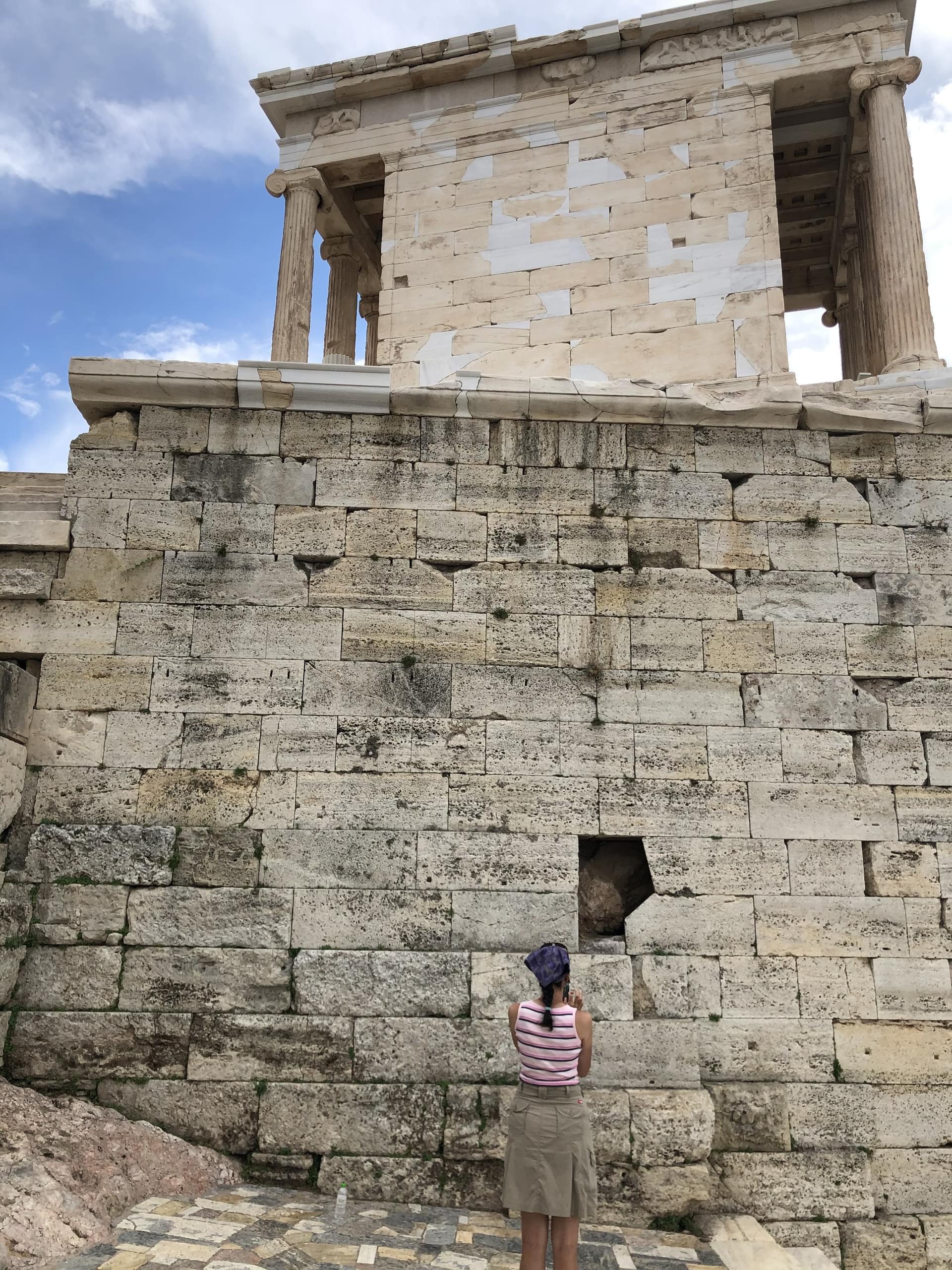
This picture captures the bastion supporting the charming little temple of Athena Nikē, which you will see immediately to your right as you climb toward the Propylaia when visiting the site. Note the strange little polygonal cutout in the bastion, which Emily is contemplating intensely in this picture: that cutout is part of the ancient masonry, and it was placed there so that Athenians of the fifth century themselves could contemplate the remnants of a bastion from the Late Bronze Age that is now encased by the stonework of the fifth century BCE.
A Closeup of the Cutout on the Bastion of Athena Nike
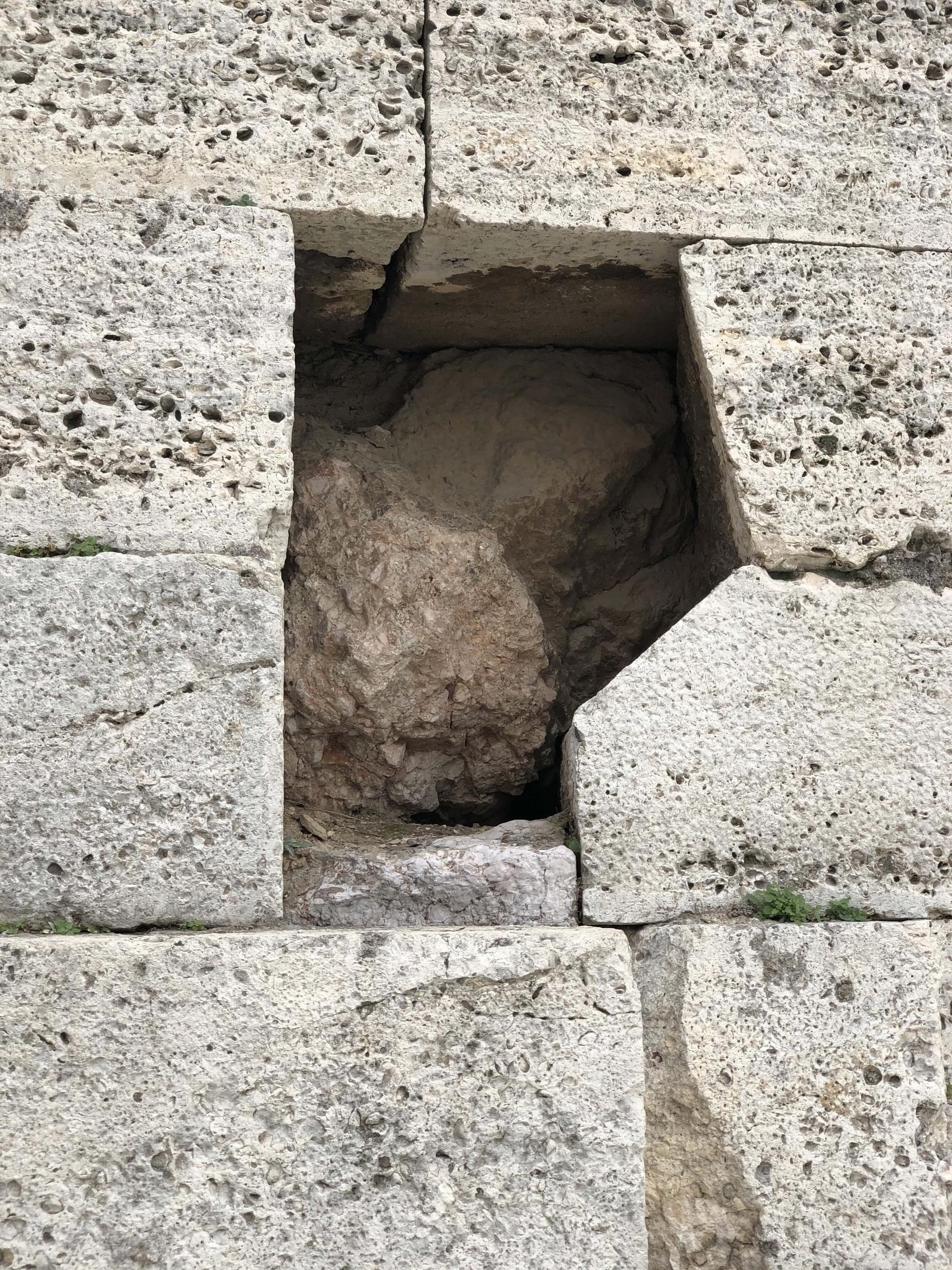
This closeup provides a slightly better look at the Bronze Age remnants within the classical Athena Nikē bastion.
The Excavation Trench to the South of the Parthenon
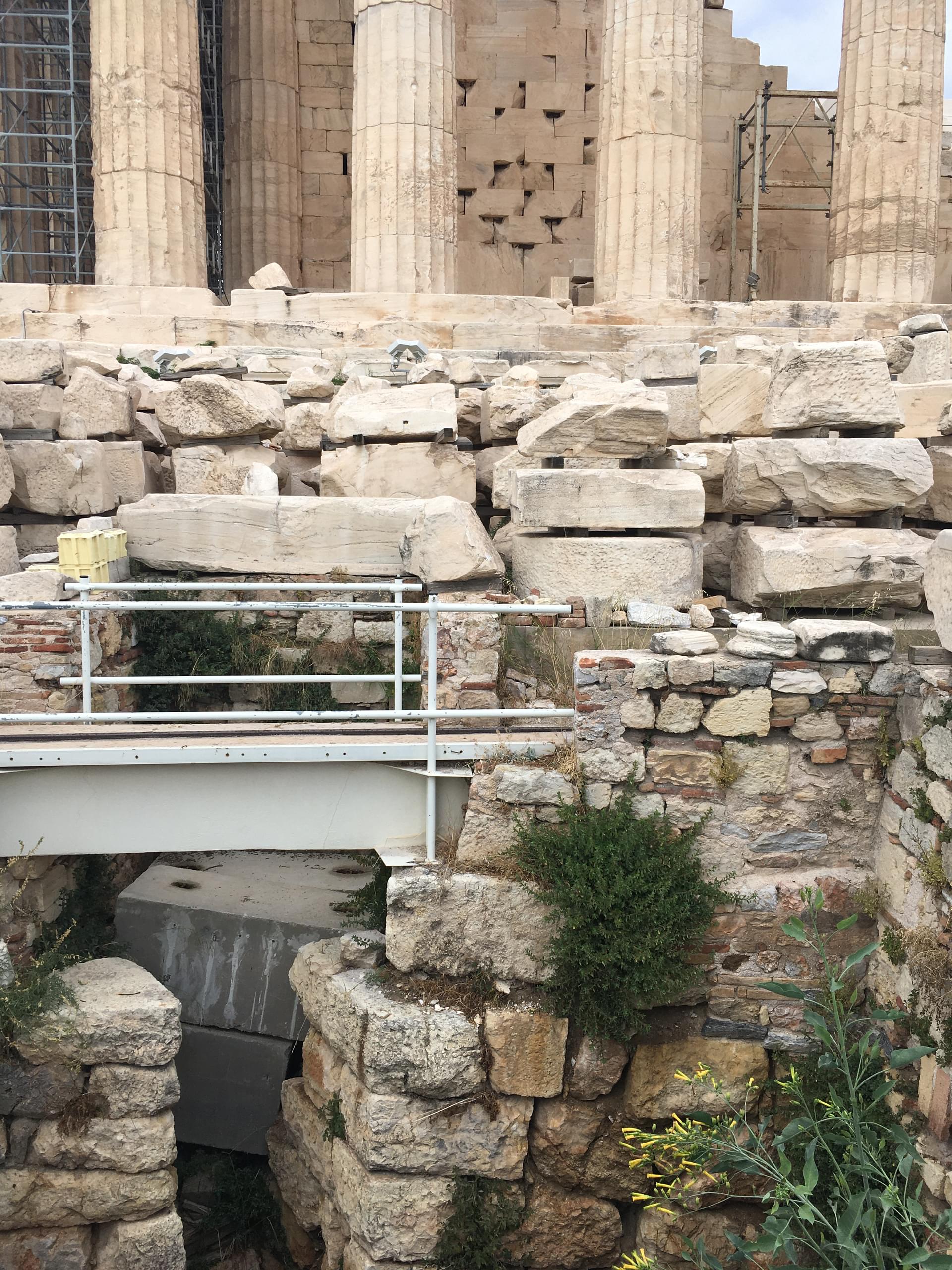
Just to the south of the western end of the Parthenon, the modern visitor will discover an excavation trench. It is a remnant of the nineteenth-century excavations, which—among other things—exposed the foundations of the Parthenon by exploring the filled-in area between the southern wall of the Bronze Age Citadel and the later retaining walls of the Classical Period (which were built further to the south on the rock of the Acropolis in order to hold the fill necessary to support the massive new Parthenon). The bottom half of this photo shows the upper stretch of the trench; If you look carefully, you'll see four or five courses of stone blocks laid in the Late Bronze Age in the bottom left hand corner of the shot (ignore the concrete blocks, which modern intrusions). The top half of the photo captures the wall of the opisthodomos on the western end of the Parthenon, as well as part of the colonnade.
The Staircase in the Trench
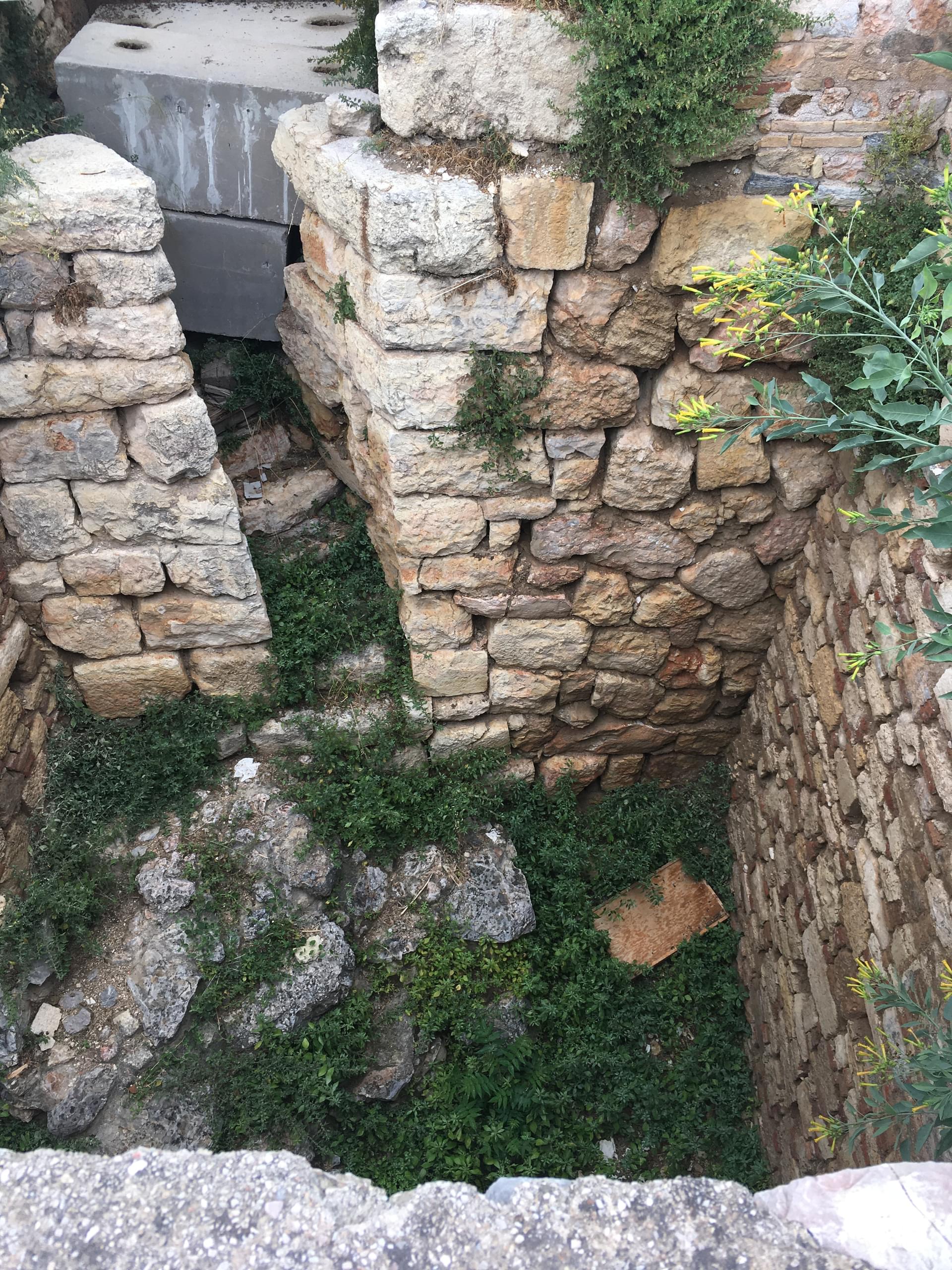
This photo offers a view of what lies within the excavation trench. The courses of large, roughly-shaped stone immediately opposite the camera are part of the Bronze Age fortifications; if you look carefully, you'll see a narrow staircase (largely overgrown) leading up through the gap in the wall in the top left quadrant of the photo.
Bonus Image 1: The excavated Bronze Age fortification wall on the south side of the Acropolis
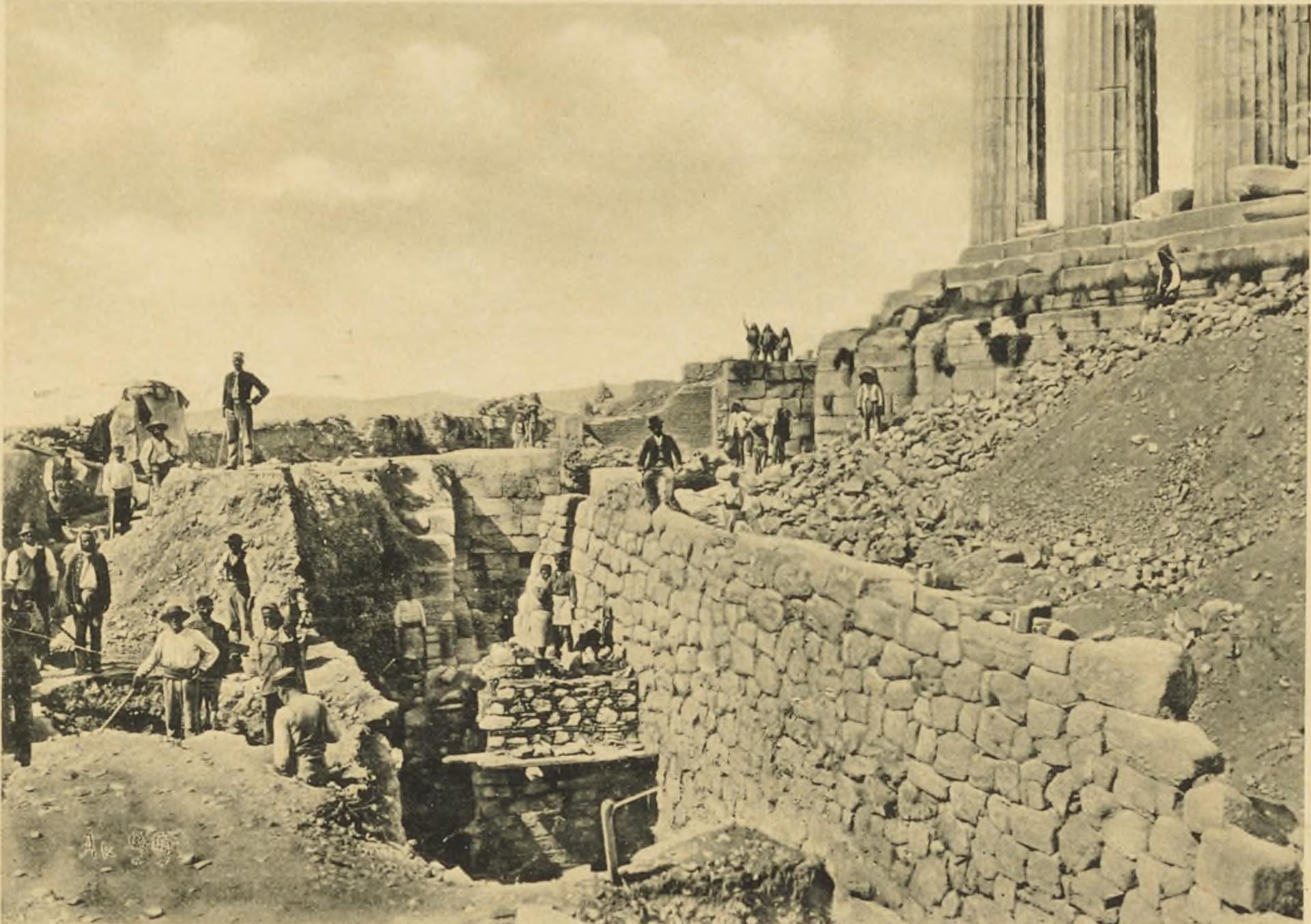
This is an image taken from Die Ausgrabung der Akropolis: vom Jahre 1885 bis zum Jahre 1890, by P. Kavvadia and G. Kaveraou (1907; retrieved from the Hathi Trust). It gives a rare glimpse of the Bronze Age fortification walls that now lie buried to the immediate south of the Parthenon, as they looked when the southern portion of the Acropolis was excavated in the nineteenth century. The gap housing the staircase visible in the modern excavation trench can be seen here near the middle of the photograph, just to the left of center.
Bonus Image 2: The Foundations of the Parthenon
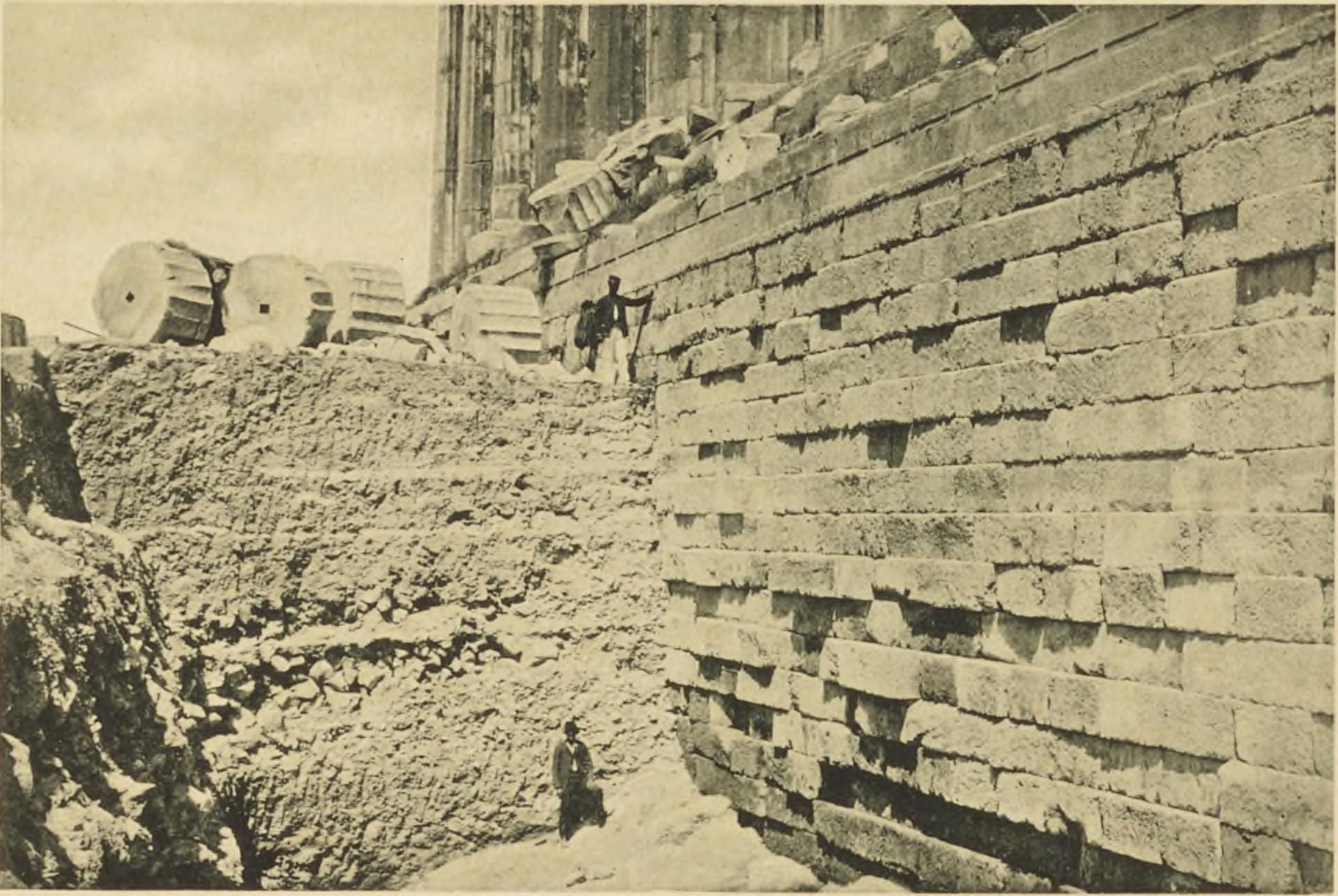
This image, also from Kavvadia and Kaveraou, gives a good impression of the Parthenon's impressive foundations. Also explored during the excavations of the nineteenth century, they are no longer exposed.