In the summer of 479 BCE, an alliance of Greek city-states fought and won a critical battle near the city of Plataea against forces commanded by Mardonius—the cousin of the Persian king, Xerxes. After pillaging Mardonius’ camp, the victorious allies used the spoils to thank three gods whom they felt deserved credit for the victory (Zeus, Poseidon, and Apollo) by dedicating monuments to them at their most important sanctuaries in Greece (Olympia, Isthmia, and Delphi, respectively).
As we mentioned in our episode covering the Battle of Salamis and the Battle of Plataea, the monument the allies dedicated to Apollo at Delphi was a bronze column, fashioned to look like the bodies of three serpents coiled together. The heads of the serpents opened at the top of the column to create a platform, on which sat a golden tripod. Eleven of the column’s coils were engraved with the names of 31 allied Greek city-states that had resisted the efforts of Xerxes to conquer the Greek mainland.
This monument stood proudly at Delphi for almost 800 years, near the altar that sat outside the great temple of Apollo. In the fourth century CE, it was removed from the sanctuary by the Roman emperor Constantine, who took it to decorate his new imperial capital, Constantinople (known formerly Byzantium, and now as Istanbul). There, it still stands, right where Constantine put it, in the heart of one of Istanbul’s most iconic public spaces.
The Serpent Column
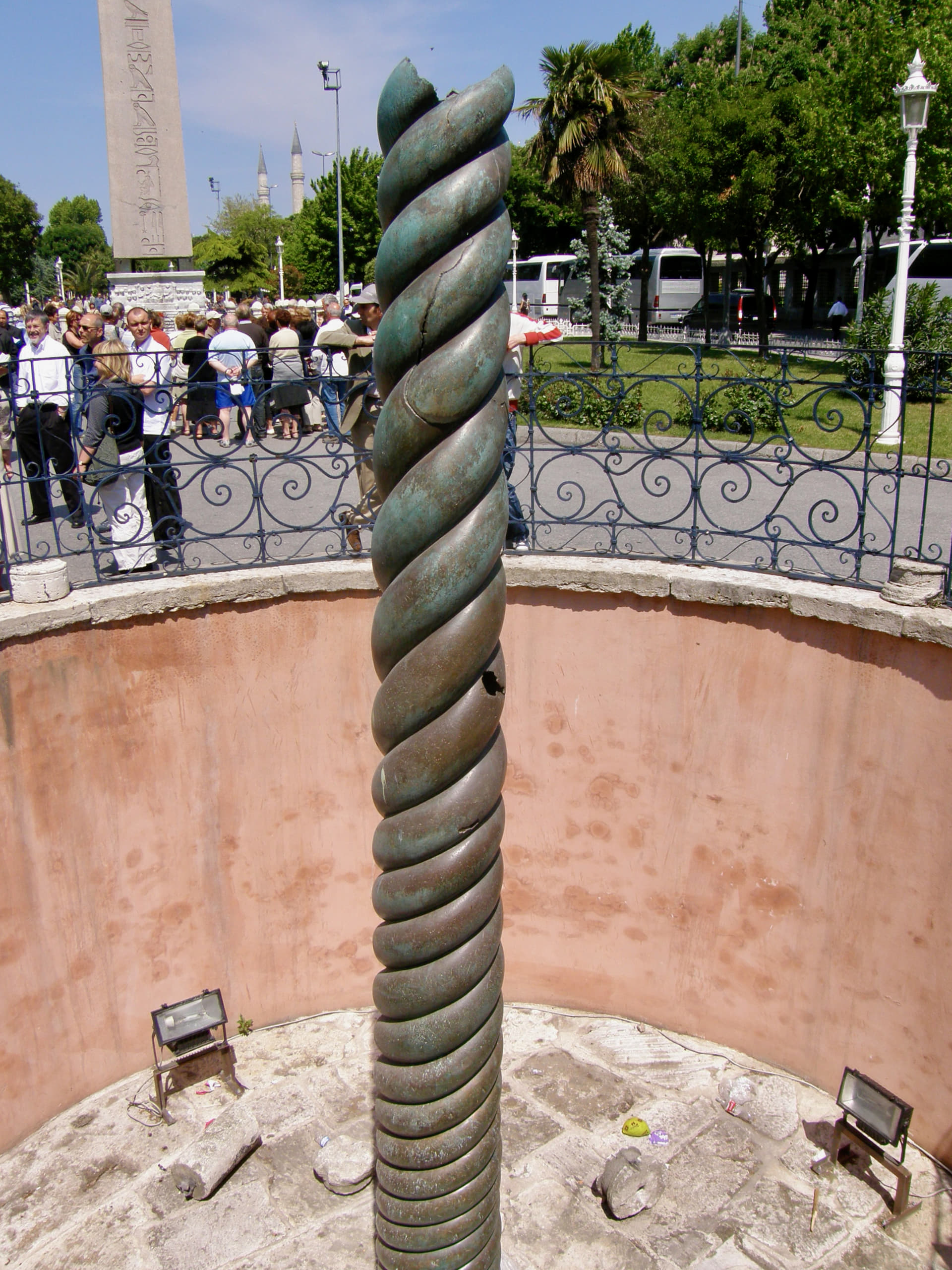
When Constantine brought the Serpent Column to Constantinople, he naturally didn’t just plop it down in any old spot. Instead, he used it to grace Constantinople’s Hippodrome—a stadium built to host chariot races, which at that time could probably seat more than 30,000 people and was second only to the famous Circus Maximus in Rome.
The Hippodrome in Constantinople featured a race track that was probably on the order of 430m / 1410 feet long. It was bisected on its long axis by a spina (dividing barrier) probably about 230m / 755 feet long, and 1.5m (5 feet) high; chariots would race down one side of the spina, round it at the end (marked by turning posts); race up the other side; and repeat. Constantine placed the Serpent Column at the central point in the spina, where it stood just as proudly over the racetrack as it had at Delphi. The spina and the racetrack are now both beneath Sultanahmet Square in modern Istanbul (the surface of the racetrack is probably about 5.5 meters below the plaza), which is why the Serpent Column sits in what looks like a pit.
As the photo demonstrates, the column today shows its age. The heads of the serpents have broken off, as have some of the upper coils of the serpents’ bodies. But visitors with good eyes (or, at least, a good camera) can still read the names of the 31 allied Greek city-states that the creators of the monument engraved on the serpents’ coils more than 2500 years ago.
The Inscription
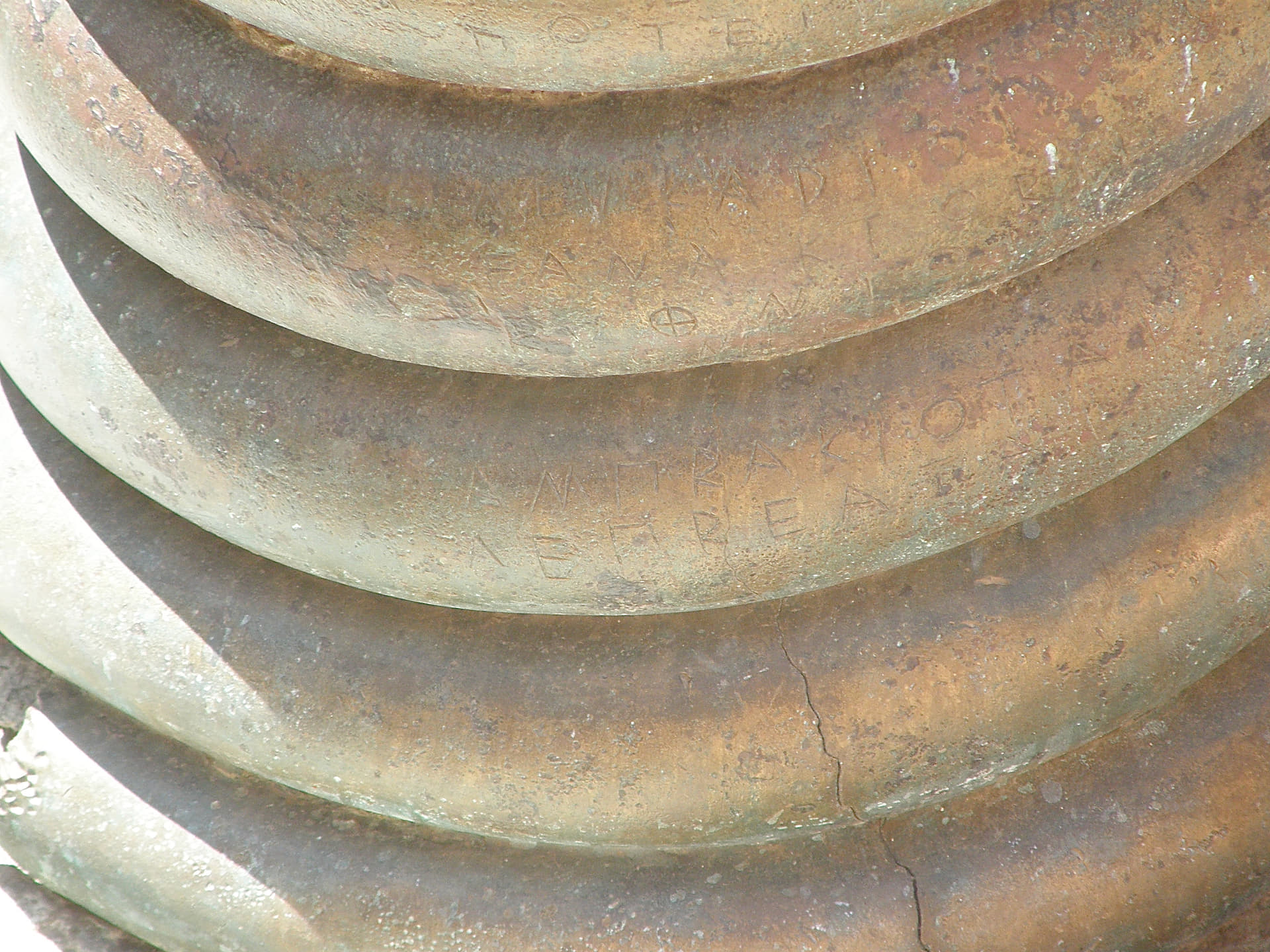
The central coil in the five coils captured by this photo is the lowermost coil of the inscription (“Coil 11”, numbering the coils of the inscription from top to bottom). On this coil are engraved the ethnonyms of two Greek city-states: the Ambraciots (ΑΜΠΡΑΚΙΟΤΑΙ) and the Lepreans (ΛΕΠΡΕΑΤΑΙ). The characters on the coil above (Coil 10) are more difficult to make out, but they spell out the ethnonyms of four other city-states: the Leucadians (ΛΕΥΚΑΔΙΟΙ), the Anaktorians (ϜΑΝΑΚΤΟΡΙΕΣ–note the digamma, all you language nerds!), the Kythnians (ΚΥΘΝΙΟΙ), and the Siphnians (ΣΙΦΝΙΟΙ). Altogether, the inscription covers another nine coils; we’ve provided the full list of allied states in the appendix, below. (The Wikipedia page also gives a decent description of the monument.)
For those of you scratching your head at the term “ethnonym”, the important thing to note here is that ancient Greeks did not speak about their polities as we do—that is, by using a personified place-name (“Canada lost to the United States in the gold medal round of the hockey tournament at the Milano games…”). Instead, they used ethnonyms referring to the people who were citizens of their polities (“The Canadians lost to the Americans…”). Make sense?
(No, Cam has not yet processed that hockey loss in a healthy way.)
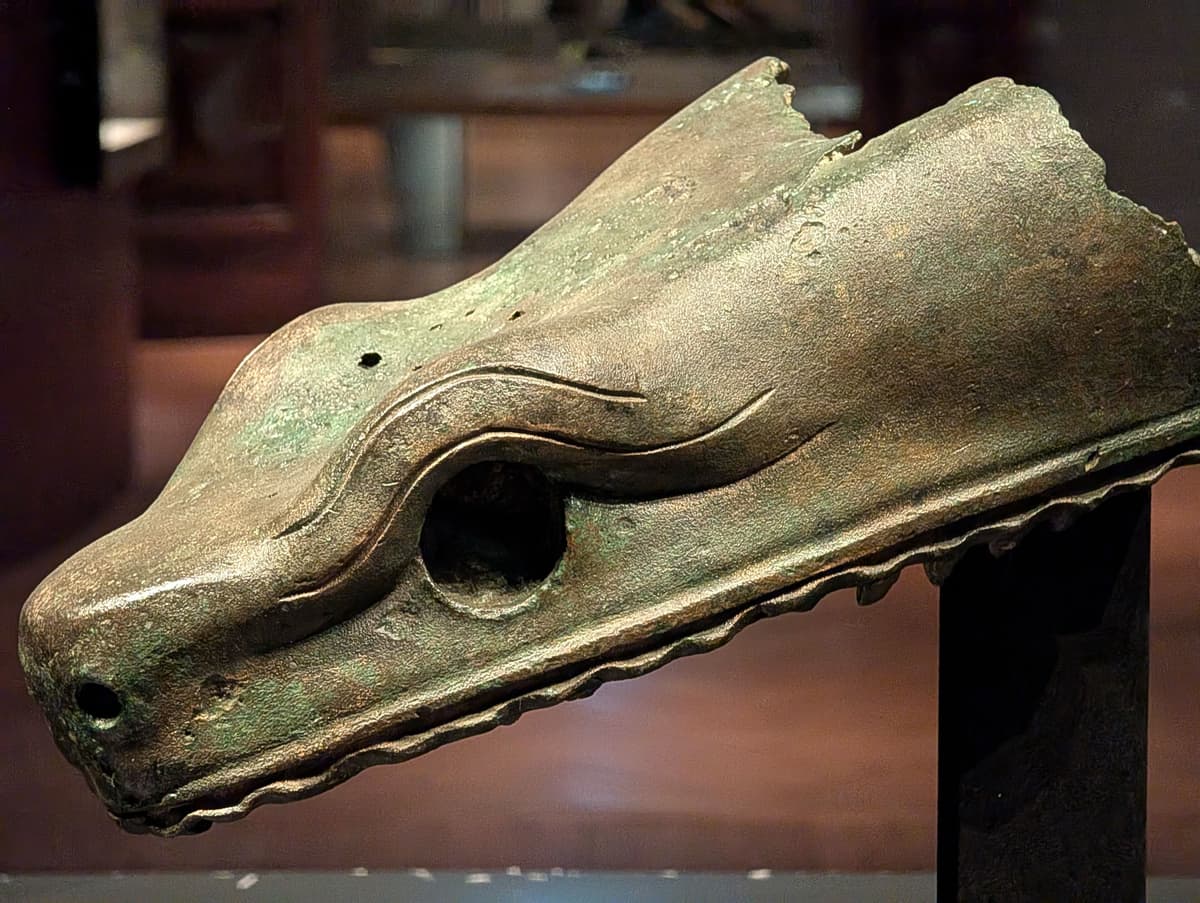
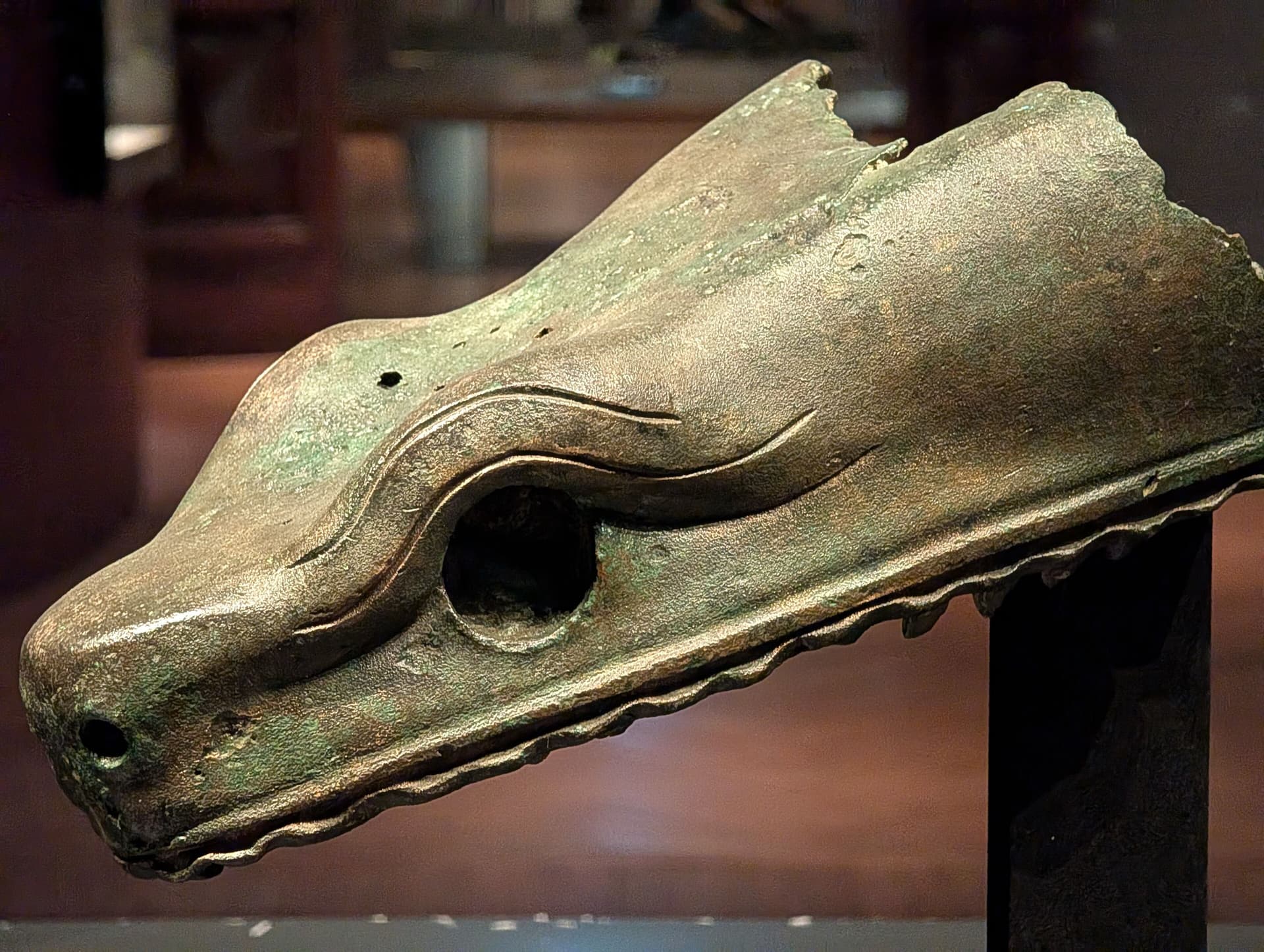
The Lone Surviving Serpent Head
(Photo by Isabeau, Wikimedia Commons)
Although the heads of the three serpents represented by the column had been broken away from the column by the end of the seventeenth century, one was discovered during excavations in 1848. It can now be seen in the Istanbul Archaeological Museums.
The Obelisk of Thutmose III
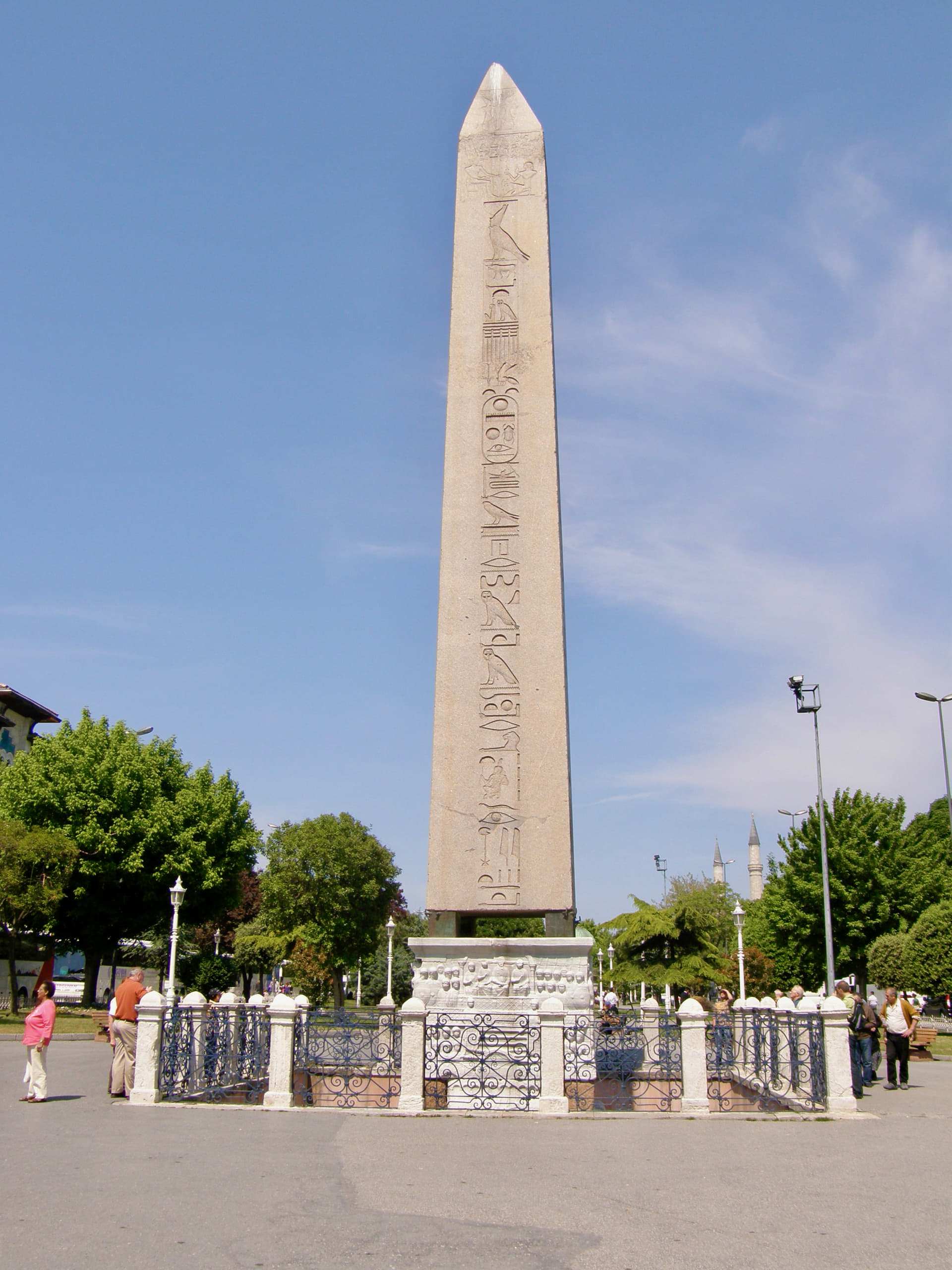
The Serpent Column was not the only monument that Constantine plundered to serve as a decoration for his Hippodrome. He also removed a pair of obelisks from Egypt, which had been erected in 1450 BCE by the pharaoh Thutmose III, at the temple of Amon-Ra in (Egyptian) Thebes. His plan, it seems, was to place one in the Circus Maximus in Rome, and the other in the Hippodrome of his new capital. Although he died before he could bring this plan to fruition, the emperor Theodosius later installed the obelisk on the spina in about 390 CE, just to the north of the Serpent column.
By Theodosius’ day, the obelisk had been broken (less than 20m of its original 34m survives), but Theodosius showcased the remaining portion dramatically by resting it on four bronze cubes, which in turn sit on two pedestals decorated with inscriptions and reliefs. The relief on the upper pedestal’s southwest face, visible in the photo above, shows Theodosius and some other officials sitting in the Hippodrome’s imperial box.
The "Fake" Obelisk
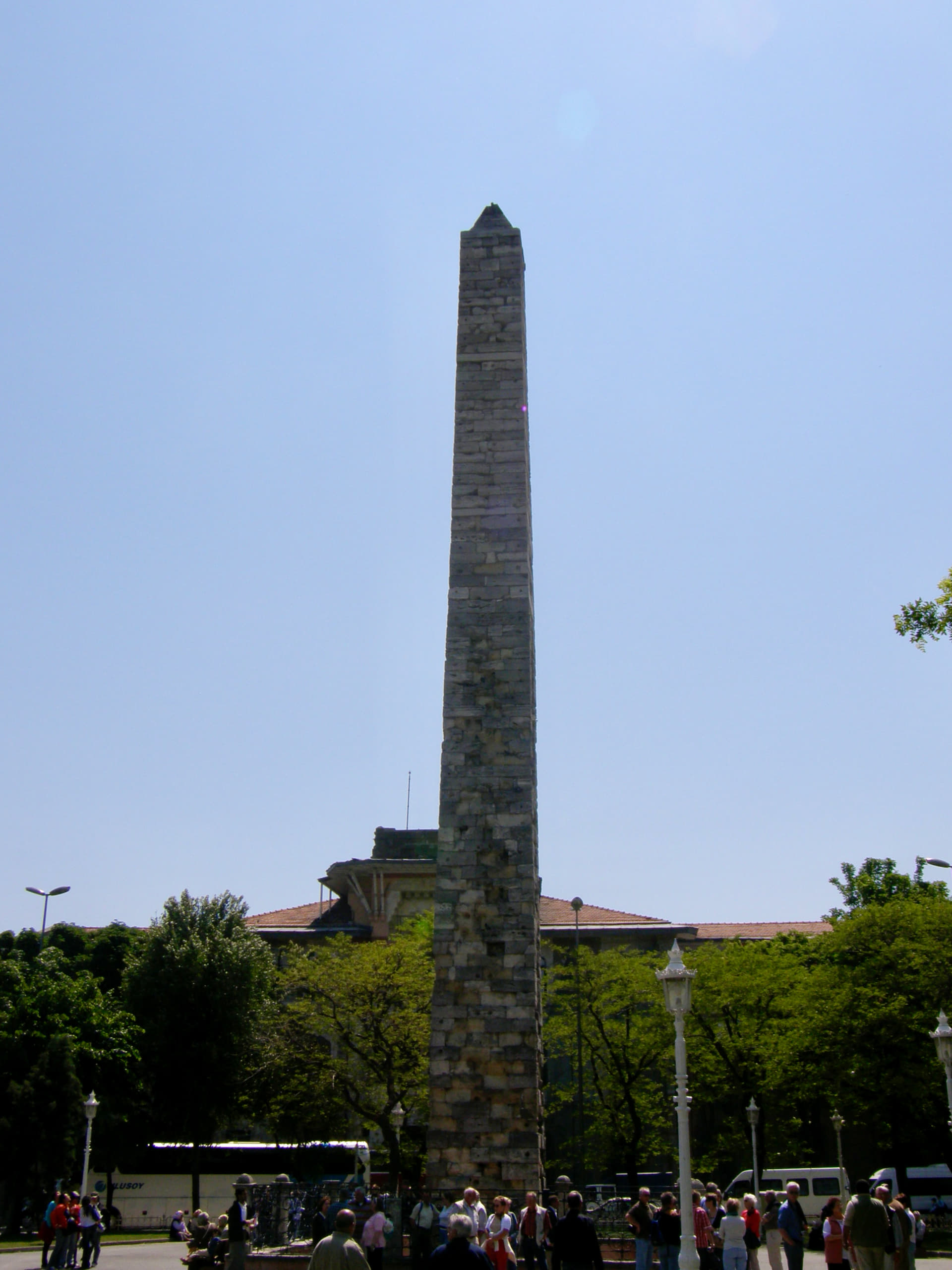
To the south of the Serpent Column, another obelisk stood on the spina of the Hippodrome. Unlike the obelisk of Thutmose III, however, this one was essentially a “fake” obelisk. It was constructed by Roman engineers in the mid fourth century CE from stone blocks, and probably faced with bronze plates. The bronze is gone (undoubtedly plundered and melted down long ago), but the stone core of the monument still stands.
The Blue Mosque
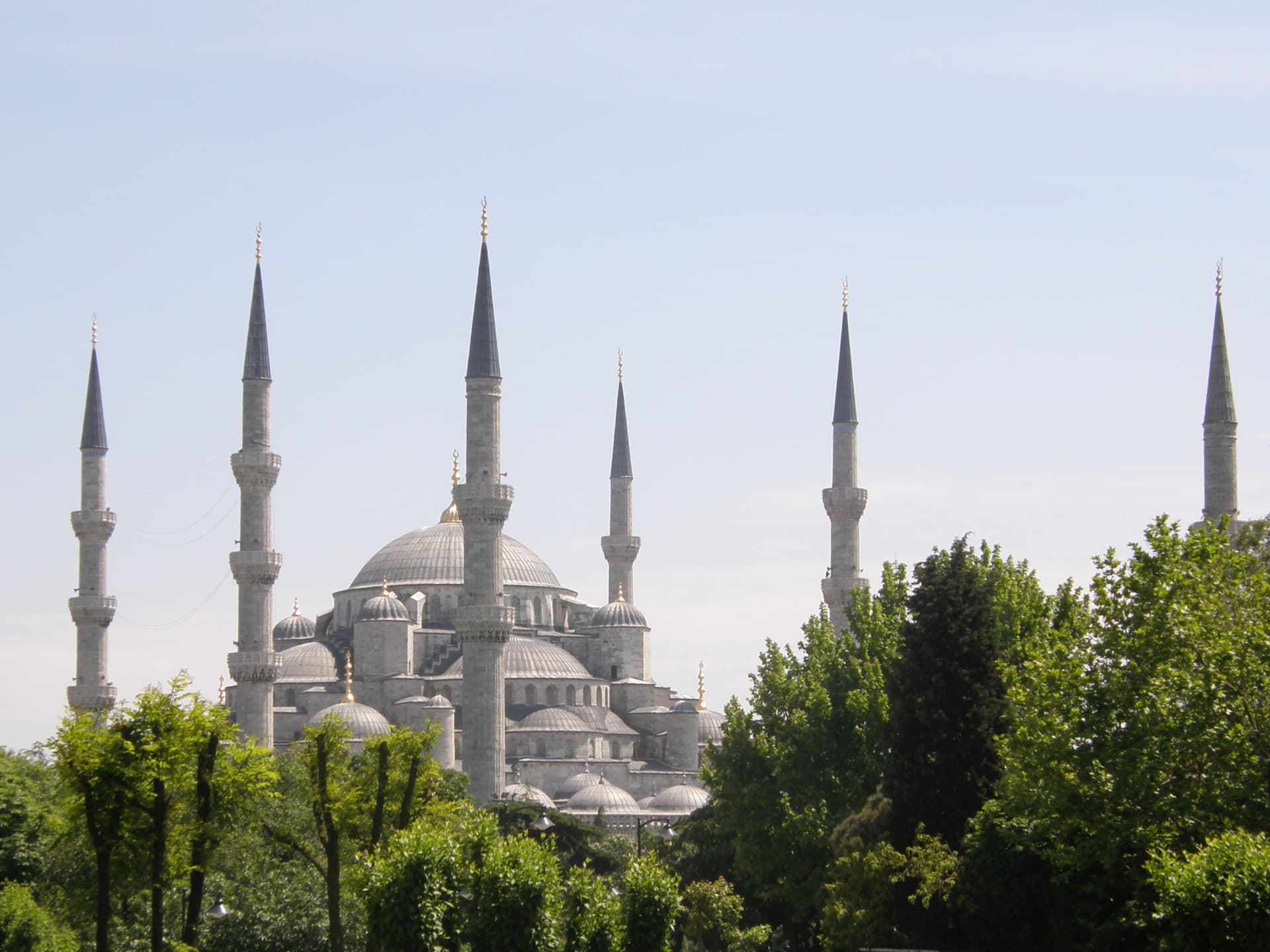
The Hippodrome of Constantinople adjoined the imperial palace, which originally lay just to the east of the stadium. The site it once occupied is now home to one of Istanbul’s most important monuments: the Sultanahmet Camii (known more commonly as the Blue Mosque), commissioned by Sultan Ahmed I in the early seventeenth century. The mosque’s front courtyard sits overtop of what used to be a section of the Hippodrome’s seating—including, perhaps, the northern bit of the imperial box, from which the emperor and his attendants would watch the races.
Given the scale and grandeur of the Blue Mosque and the other monuments in Sultanahmet Square, it is easy for a modern visitor to feel somewhat underwhelmed by the Serpent Column. And, to be fair, in Theodosius’ day the column was arguably visibly overshadowed by the obelisks that flanked it, and by the monumentality of the Hippodrome’s imperial box.
The serpent column, however, was clearly the spiritual heart of Constantine’s Hippodrome complex. For 800 years it had stood at Delphi, often regarded as “the navel of the world”. From Constantine’s day onward, it would stand instead at the center of a new world—in the precise middle of the spina, directly across from the emperor’s seat in the Imperial Box, in the Hippodrome in which the ruler of the Roman World regularly basked in the cheers (and sometimes suffered the jeers) of his people.
Appendix—The Serpent Column's Inscription
[Coil 1] By these, the war was fought:
[Coil 2] Lakedaimonians [i.e, the Spartans], Athenians, Corinthians
[Coil 3] Tegeans, Sicyonians, Aeginetans
[Coil 4] Megarians, Epidaurians, Erchomenians
[Coil 5] Phleiasians, Troezenians, Hermionians
[Coil 6] Tirynthians, Plataeans, Thespians
[Coil 7] Mycenians, Ceians, Melians, Tenians
[Coil 8] Naxians, Eretrians, Chalcidians
[Coil 9] Styrians, Haleians, Potidaeans
[Coil 10] Leucadians, Anactorians, Cythnians, Siphnians
[Coil 11] Ambraciots, Lepreans