
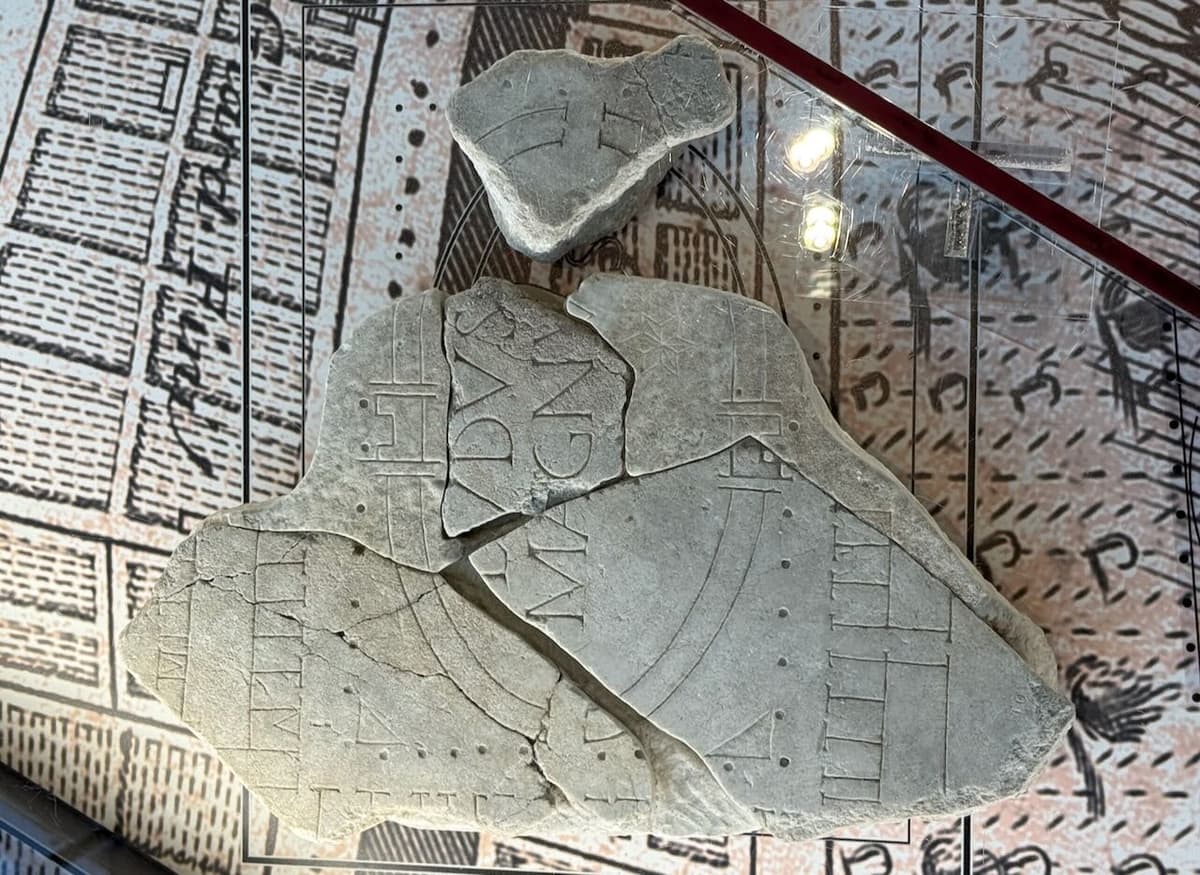
Our recent trip to Rome gave us a chance to stop at the new Museo della Forma Urbis, built to display the remains of the Severan-era marble plan of the city of Rome. Mounted on a wall inside the Temple of Peace in the early third century CE, this monumental plan (about 18m wide and 13m tall) depicted the footprint of Rome and its buildings.
The museum displays most of the surviving fragments beneath a glass floor, which allows visitors to wander and inspect them to their hearts’ content. Where fragments do not survive, the museum displays the corresponding portions of Giovanni Battista Nolli’s “New map of Rome”, published in 1748 (available for online viewing at Stanford University, and downloadable for iPad and iPhone at nolli-app.com). The result is a truly fascinating composite of Rome’s urban history across time.
The Museum's Main Room
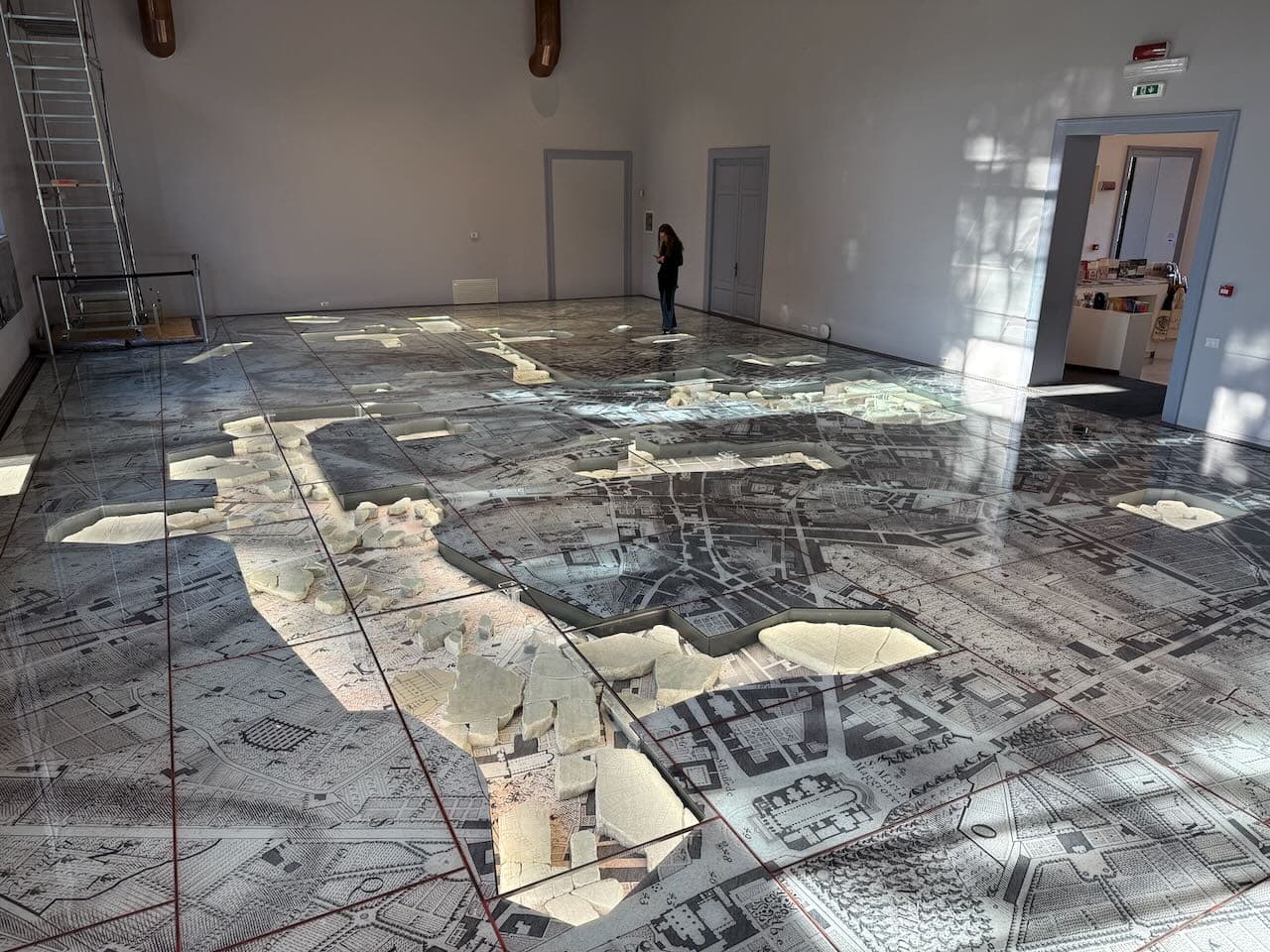
This photo gives a good sense of the museum's primary exhibit. The surviving fragments are recessed a few centimeters below floor level and illuminated. Nolli's 1748 map of Rome is presented in grayscale where pieces of the Forma Urbis do not exist. The map's "North" is to the right (i.e. the direction of the doorway); "West" is the back wall.
The Ludus Magnus
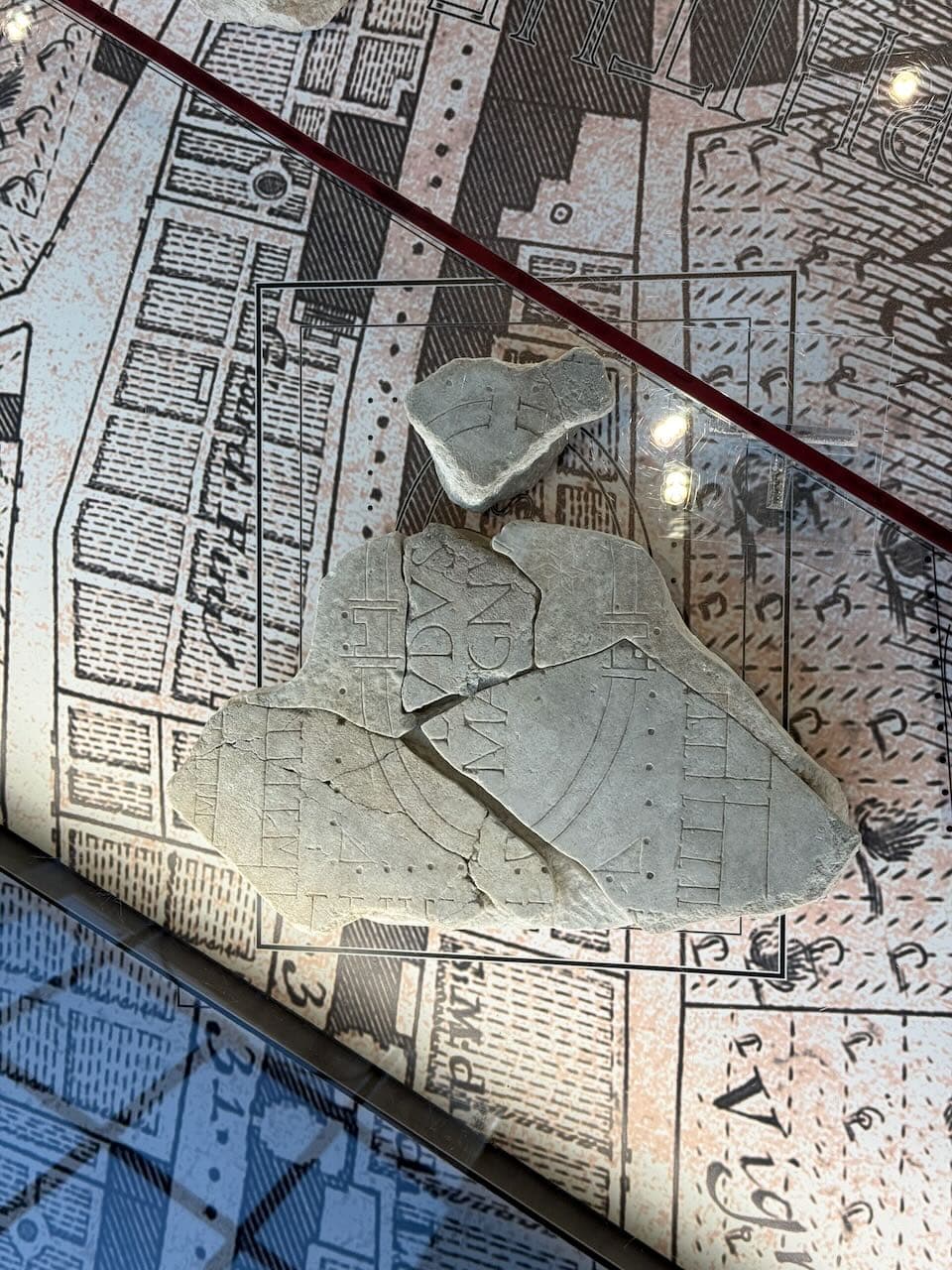
This fragment depicts the Ludus Magnus—the gladiatorial training facility that stood immediately to the east of the Flavian Amphitheatre (i.e. the Colosseum).
The Theatre of Marcellus
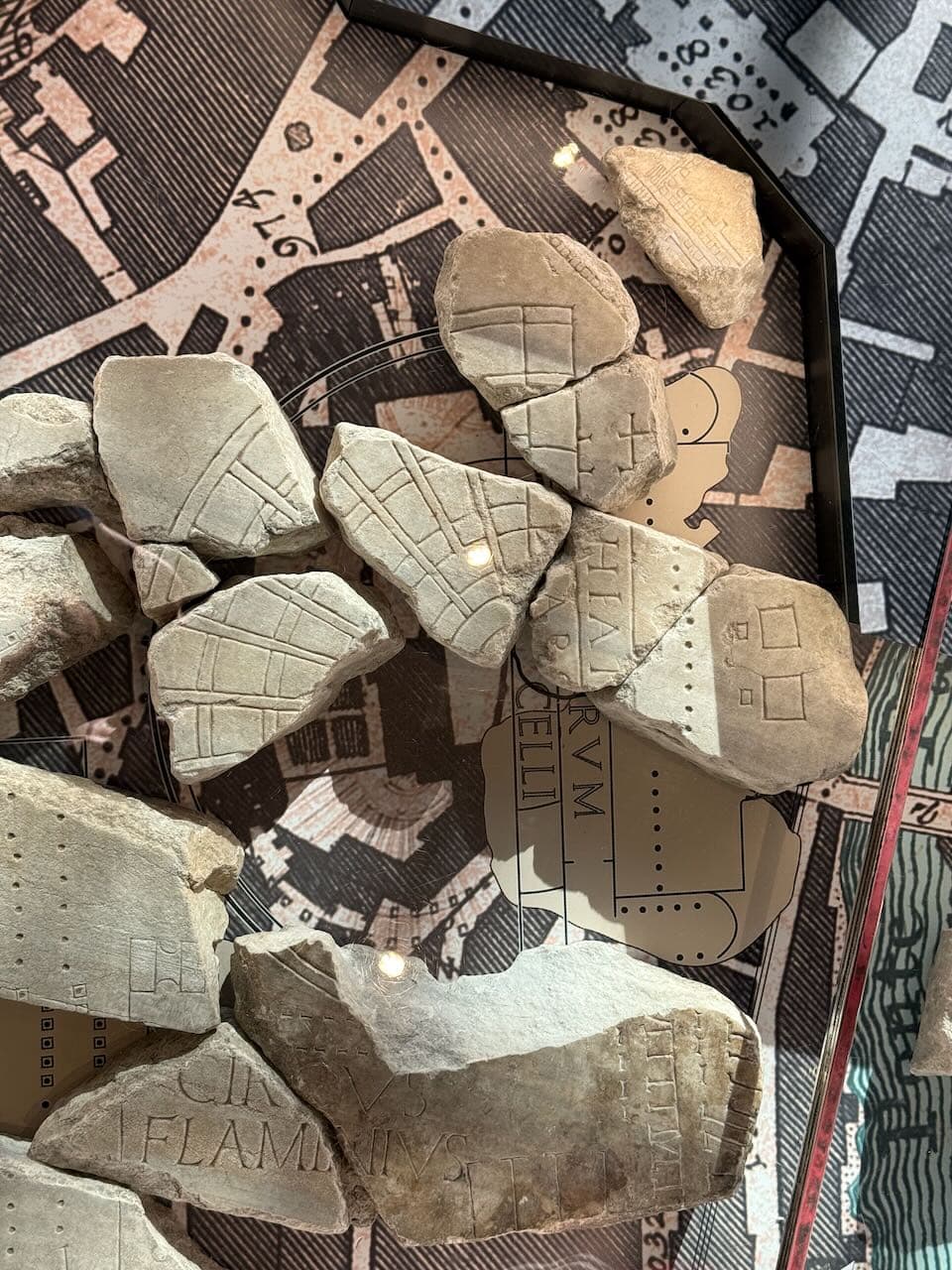
These fragments depict the Theatre of Marcellus and the Circus Flaminius, both of which stood on the east bank of the Tiber River, immediately across from Tiber Island. Immediately to the right of the fragments is Nolli's depiction of the Tiber River and the Pons Fabricius (the oldest standing bridge in Rome) as they existed in 1748.
The Sacred Area of the Largo Argentina
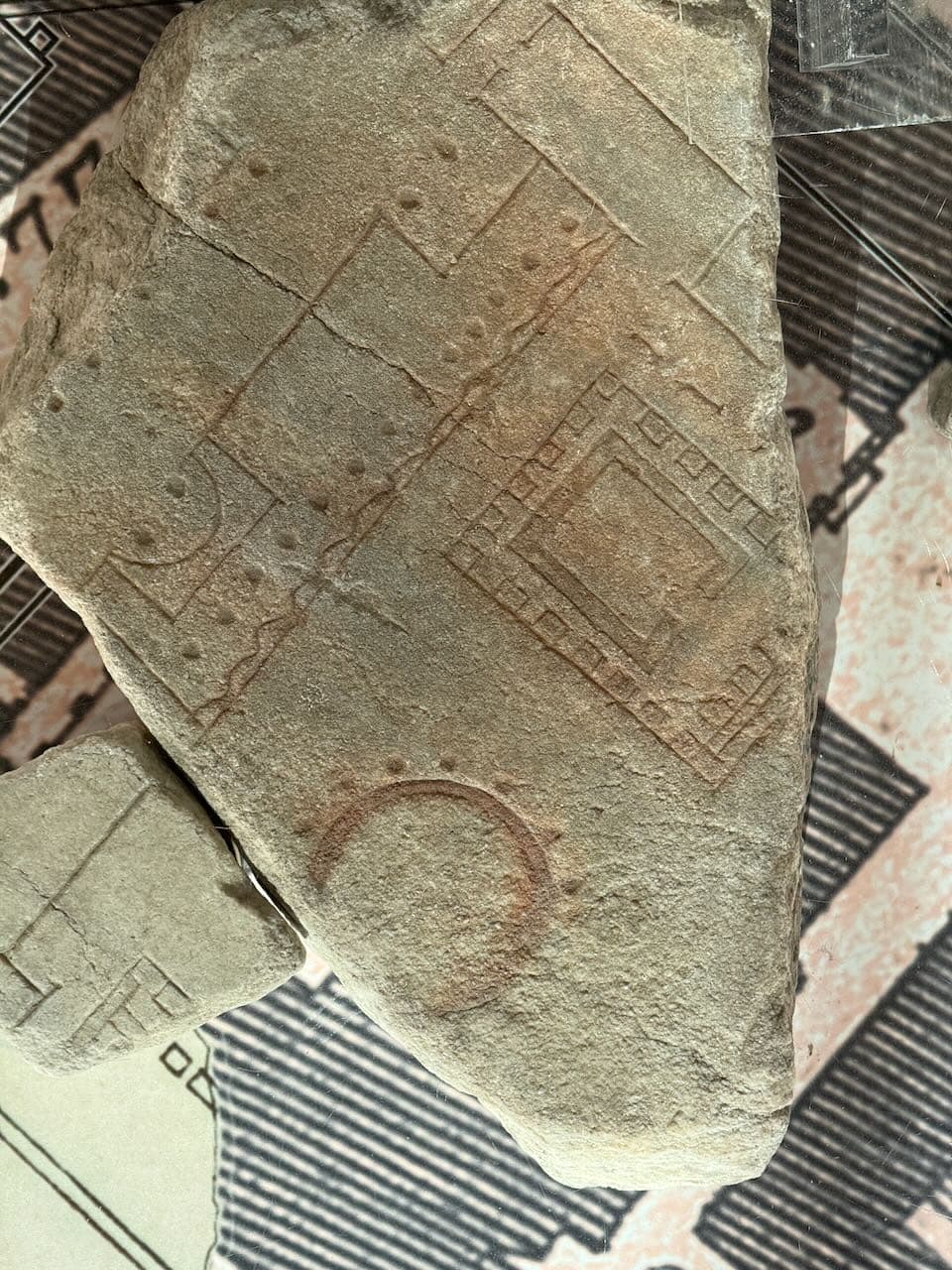
This fragment shows two of the temples that can be seen today in the archaeological site of the Largo Argentina Sacred Area. The area as it exists today contains the remains of four "manubial" temples—that is, temples constructed by victorious commanders to fulfill vows made to the gods and financed by spoils of war. The rectangular temple near the top of the shot ("Temple A") is probably the Temple of Juturna, vowed and built by Gaius Lutatius Catulus after his forces defeated a Carthaginian fleet decisively at the Aegates Islands in 241 BCE. The circular temple ("Temple B") is probably the Temple of Today's Fortune, vowed and built by Quintus Lutatius Catulus after his victory against the Cimbri in 101 BCE.
Immediately to the west of Temple B was the Curia of the Theatre of Pompey. The Theatre of Pompey was Rome's first permanent stone theatre, built in 55 BCE. The Curia of Pompey was a meeting hall built into the complex, and is famous as the place where Julius Caesar was assassinated on the Ides of March, 44 BCE.
To here more about the trip to Rome in which we visited the Forma Urbis, be sure to listen to Episode 12 of our podcast!