
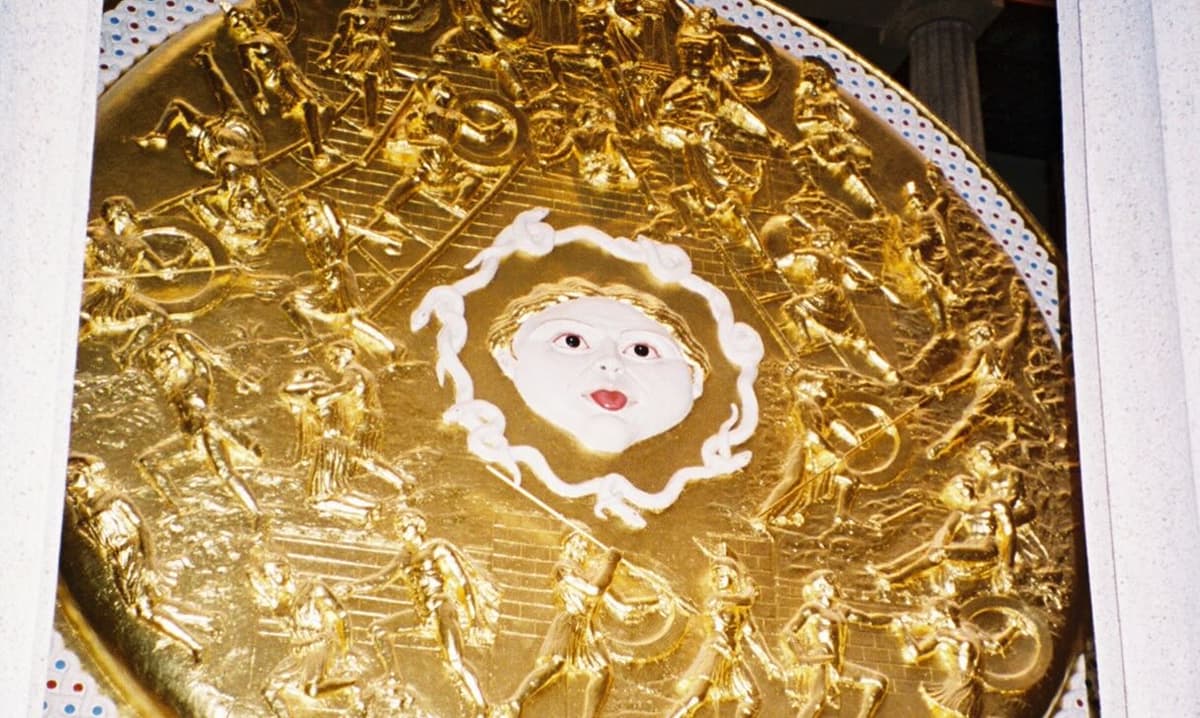
In antiquity, the east chamber of the Parthenon housed a colossal statue of Athena, designed by the master sculptor Pheidias. Built around a wooden frame, the statue had features rendered in ivory, and a robe and armor decorated in gold.
The statue no longer survives, and its ultimate fate is unknown. It can, however, be reconstructed based on descriptions given to us by authors who saw it during the first and second centuries CE (Pliny the Elder and Pausanias), and on small-scale replicas that were popular in antiquity. The most well-known of these is the “Varvakeion Athena”—a marble statue of about 3.5 feet in heigh, carved in the second century CE, which was discovered in the late nineteenth century in a suburb of Athens.
As we noted in our recent episode on the Parthenon (listen if you haven’t already!), the Nashville Parthenon (itself a replica of the ancient Athenian Parthenon) houses a spectacular replica of Pheidias’ ancient statue. Designed by Alan LeQuire, the modern statue is a full-sized representation of Pheidias’ sculpture, almost 42 ft (12 m) tall. Ivory-colored paint and gold leaf create a vivid impression of what the original statue may have looked like.
The Nashville Athena: First Impressions
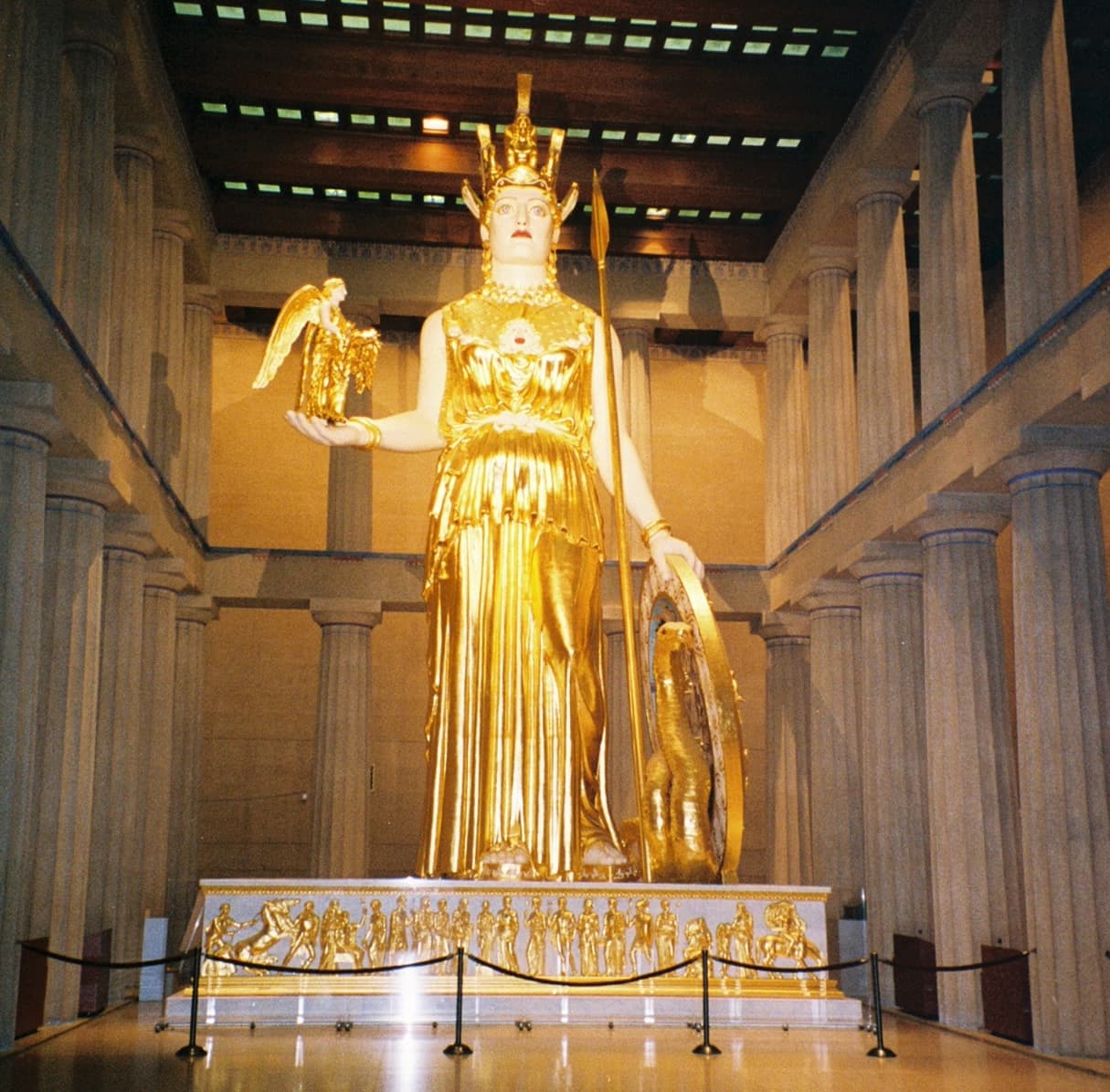
This is the view that greets visitors as they enter the main chamber of the Nashville Parthenon (which—unlike the original Parthenon—is accessed by a staircase from a museum on a lower level, rather than by the massive front doors). The winged Nikē (Victory) in Athena’s outstretched right hand provides a sense of scale: Nikē is six feet / 1.8 meters tall!
The Nashville Athena: A View from Below
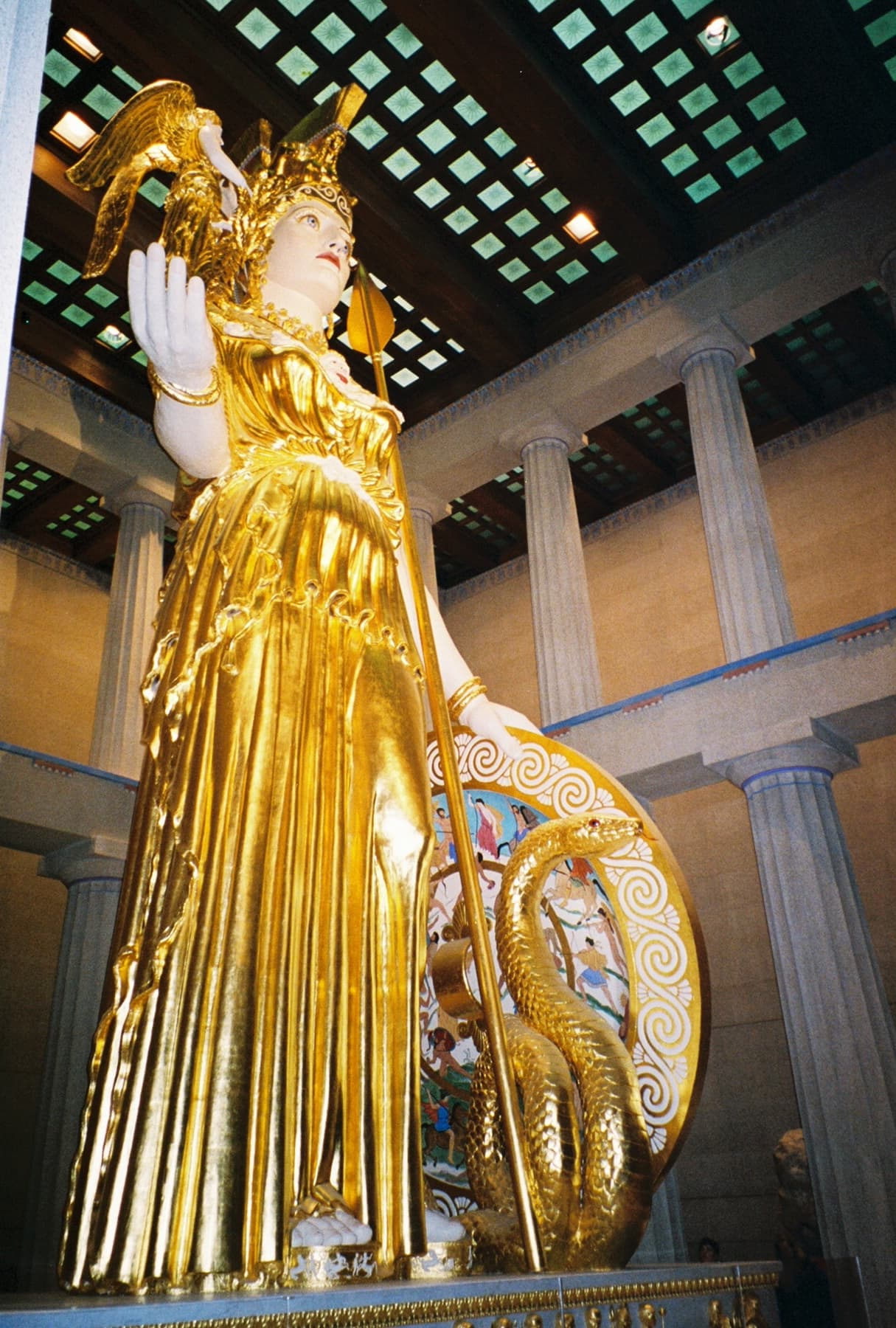
This is a view from below, much nearer to the podium. It offers another perspective on Athena’s sheer size. This view also offers a glimpse of the painted scene on the interior of Athena’s shield—which, according to Pliny the Elder (NH 36.4) depicted a Gigantomachy (a battle between Greek gods and giants). Pliny, of course, calls Athena by the name of her Roman analogue, Minerva.
The Nashville Athena: The Gigantomachy
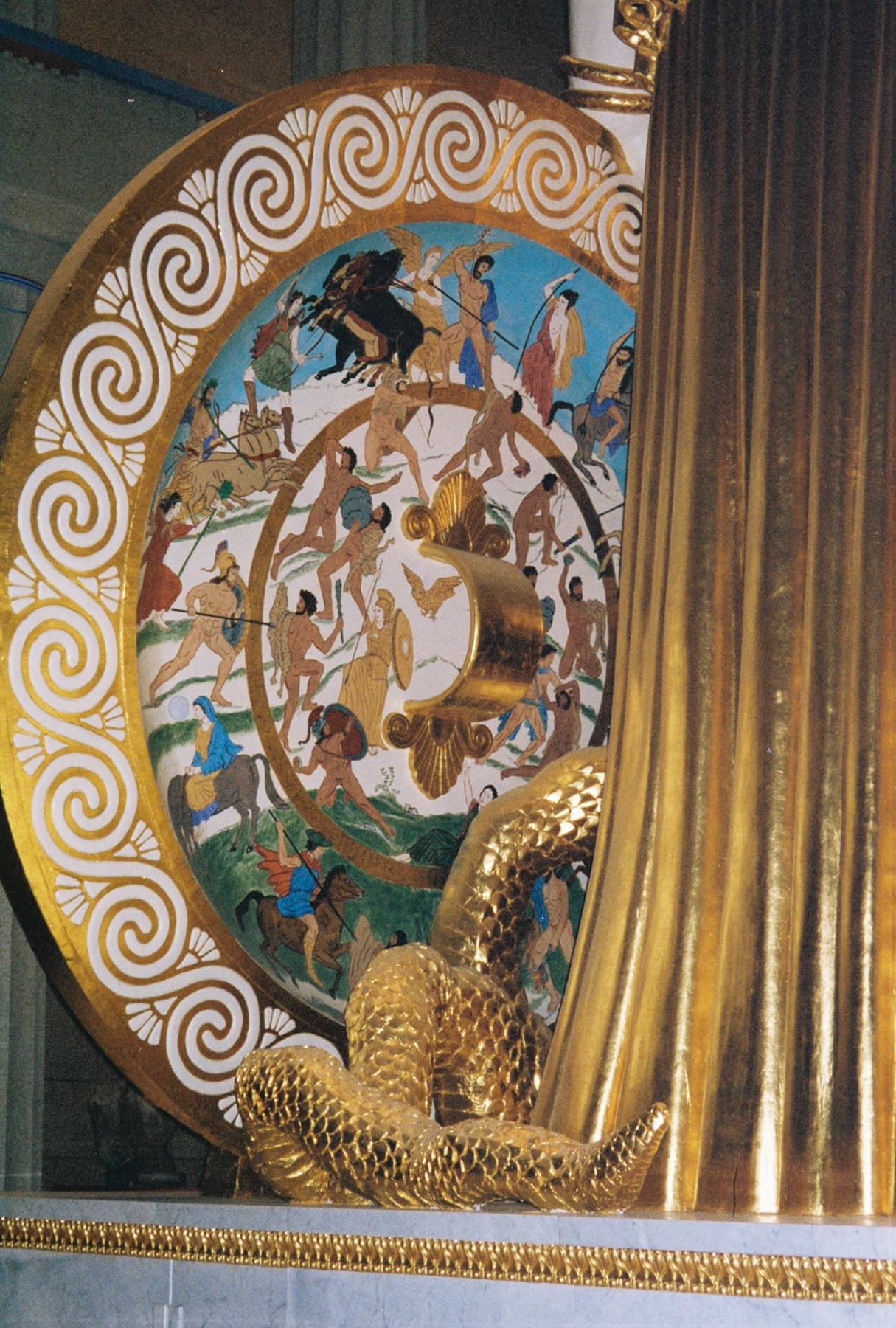
A view, taken from behind the statue, of the Gigantomachy painted on the inner surface of Athena’s shield. Military history buffs will note that the artists responsible for the statue have faithfully supplied the shield with a porpax (the central armband through which a warrior would have passed his forearm), but not the antilabe (the grip for the hand inside the edge of the shield).
The Nashville Athena: The Amazonomachy
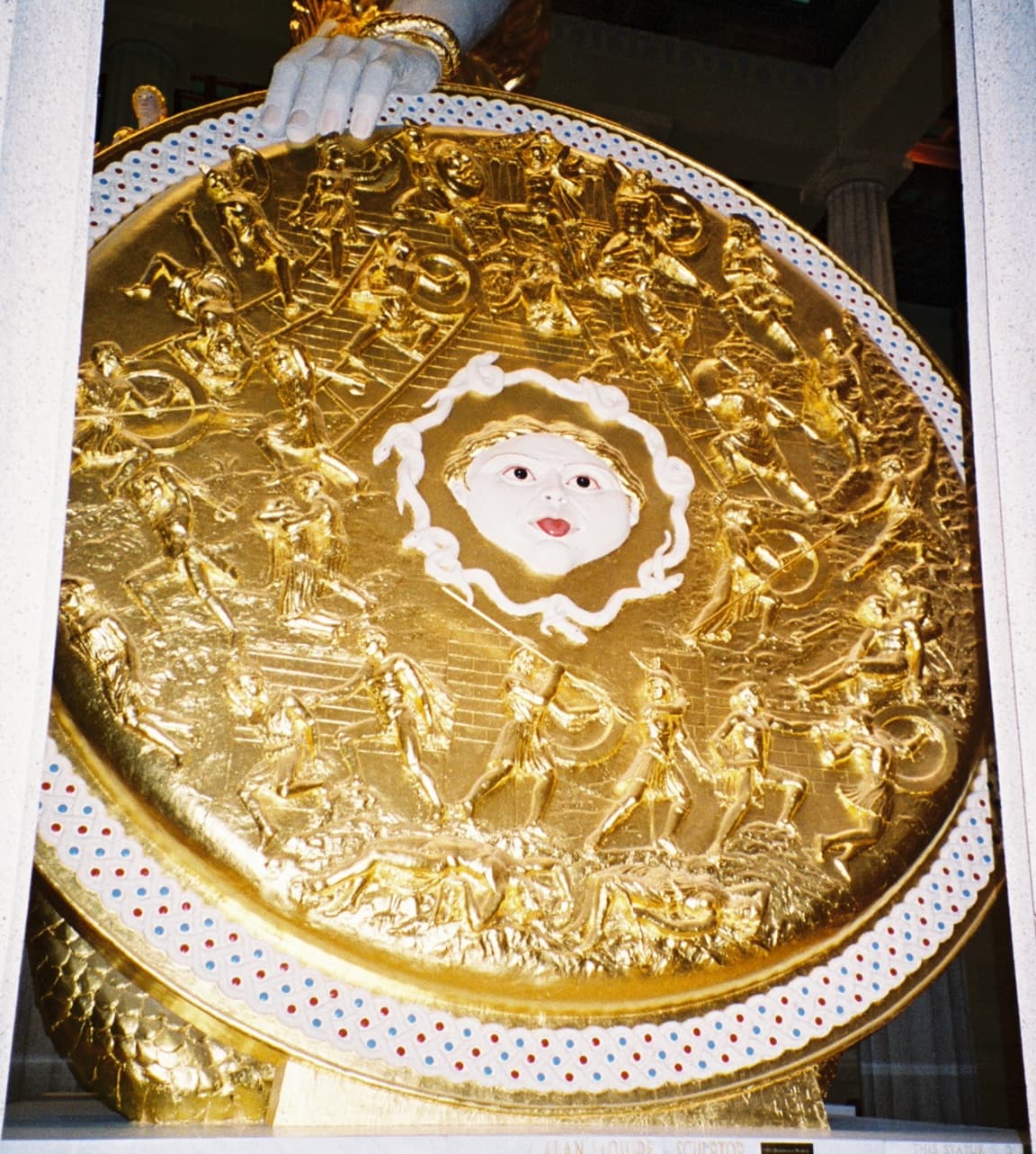
Pliny notes that the external face of Athena’s shield (if you’d like, the “business end”) was decorated with a chased Amazonomachy—that is, a battle between Greeks and Amazons, represented in a sheet of metal (probably gold) affixed to the front of the shield.
Bonus Picture 1: The East Façade of the Nashville Parthenon
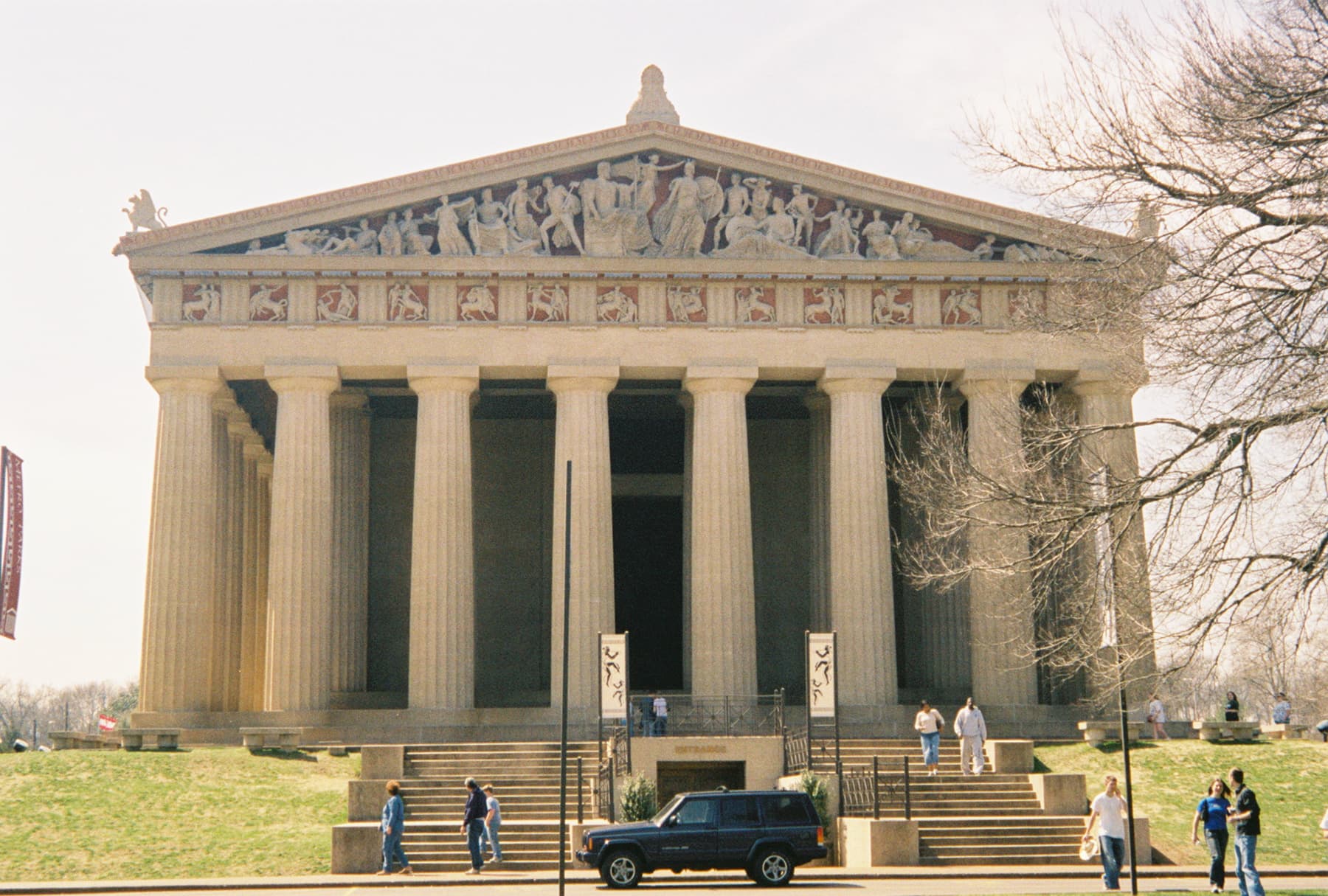
This picture shows the eastern façade of the replica Parthenon in Nashville. It gives a good sense of the scale of the building, which is at the very least evocative of what the ancient Parthenon might have looked like on the side of the main entrance (i.e., the entrance to the cella, in which the cult statue was kept).
We do have some quibbles:
First, while the pediment sculptures provide a decent interpretation of the original Parthenon’s eastern sculpture group, which depicted the birth of Athena, the metopes are wrong: on the original structure, the eastern metopes (the carved rectangular panels) depicted a Gigantomachy, and not a battle between Lapiths and centaurs, which is what we see on the Nashville replica. On the Athenian Parthenon, the metopes with the centaur battle were on the south side.
Second, while we appreciate the addition of some color, the sculptures themselves on the ancient building would have painted, and in multiple colors. Even blue! (And if you understand that reference about the color blue, you are a true afficionado of esoteric trivia re: wildly wrong modern understandings of antiquity.)
Third, the façade is somewhat spoiled by the addition of the lower entrance, which leads to a museum gallery underneath the structure (which, obviously, would not have existed in the ancient building).
Fourth (and this is really petty, of course), the original structure was made of marble!
All quibbles aside, the Nashville Parthenon is very much worth a visit.
Bonus Picture 2: The East Façade of the REAL Parthenon
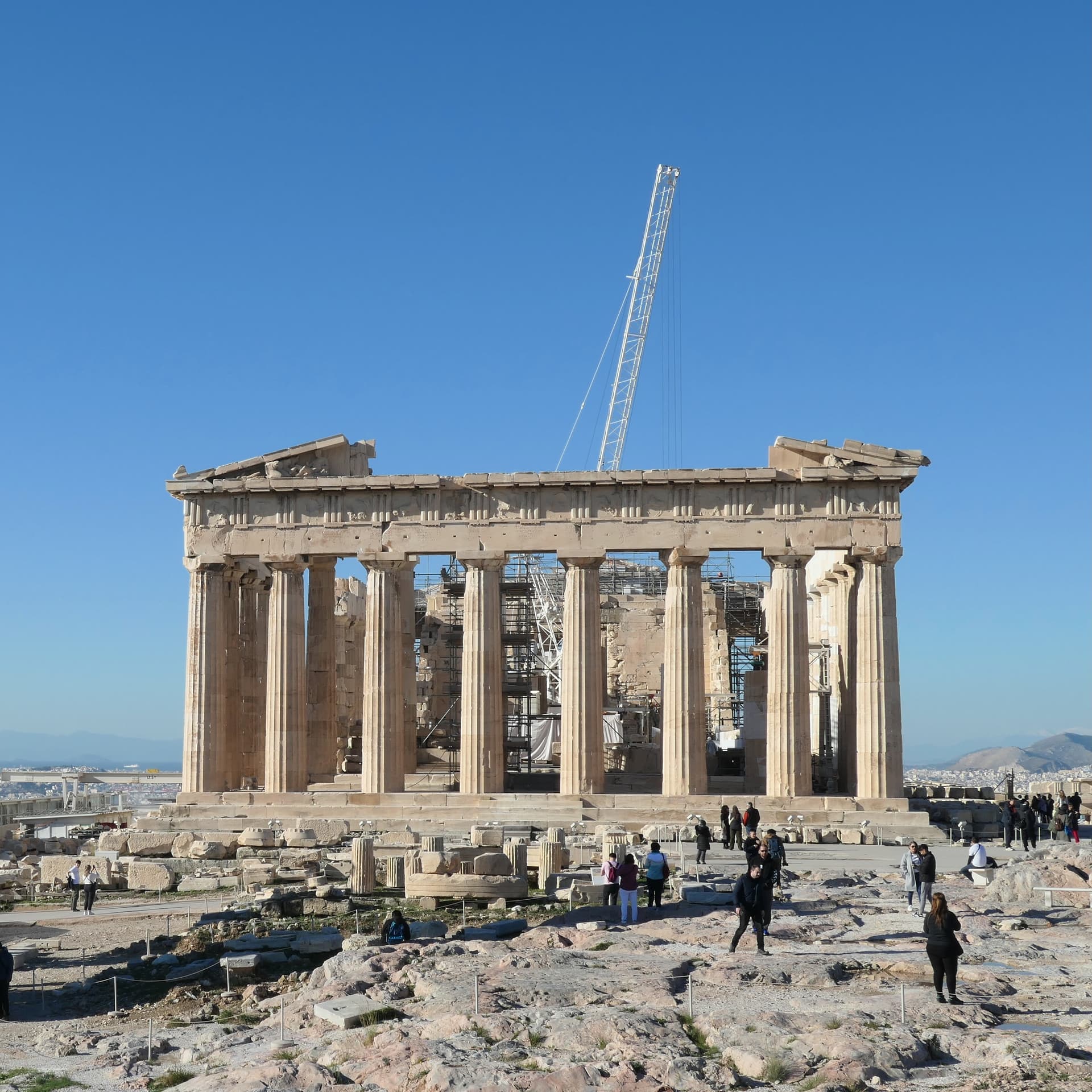
Because we couldn’t end this post without a picture of the real building, here’s a shot of the east façade of the Parthenon as it looks today. You will notice that, while gorgeous, it is nevertheless in rough shape, simply because lots of the building (and its sculpture) is missing. Find out why on our second Acropolis episode, due to air on October 15, 2025!